
Published: 23 October 2026 · İnter Servis Ekipmanları
1. Which Fluid Will Be Used?
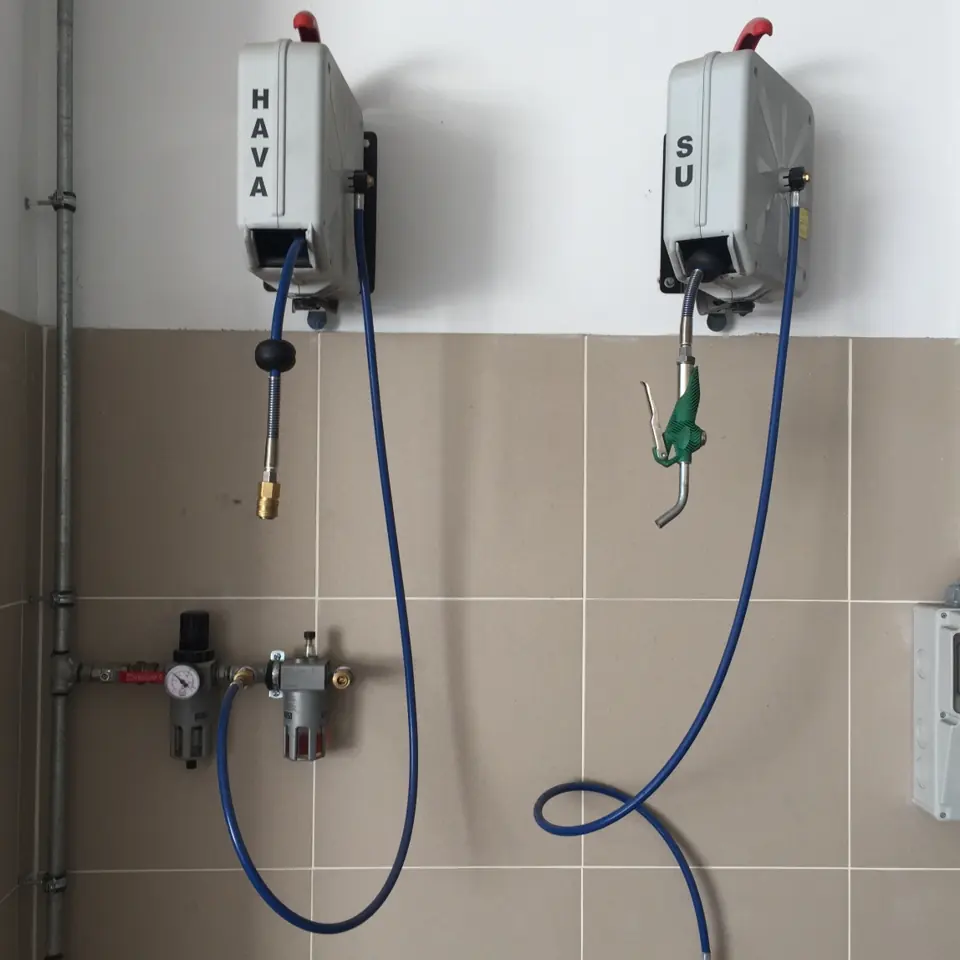
A reel is chosen for the fluid that flows through it. A reel for air and water is not the same as one for grease or diesel. Density, abrasiveness and flammability decide the body material, seals and swivel.
- For air and water, painted steel or ABS-drum reels are common.
- For aggressive fluids and hygiene areas, AISI 304 or AISI 316 stainless steel is preferred.
- There are dedicated reels for oil, grease, diesel and AdBlue®.
2. What Is the Longest Hose Length You Need?
Size the reel for the furthest point the hose has to reach: the far side of the lift, the rear axle or the end of the pit. Hose length decides the reel series and drum size. Too much hose fills the drum; too little makes the technician pull.
3. What Is the Working Pressure?
Reel and hose must match the working pressure of the line. Typical ranges for spring-rewind open reels in the RAASM catalogue:
- Air and water: 10–20 bar
- Oil and similar: 50–150 bar
- Grease: 400–600 bar
- Hot water: from 50 bar up to 700 bar
4. What Flow Rate Is Required?
Flow rate decides the hose diameter and the internal bore of the swivel. A line that is too narrow causes pressure loss and the tool or gun underperforms. In oil dispensing, flow also determines fill time.
Don't Forget Mounting and Accessories
Reels mount on the wall, ceiling, workbench or an HEA beam, and the arms can be repositioned later. For heavy or long hoses, consider a motorised reel, a rewind brake in case the hose is released, and an automatic hose guide for even winding.
Send us the answers to these four questions and we will select and install the right reel. See all models on our Hose reels page, and our compressed air and water hose reel installation pages.