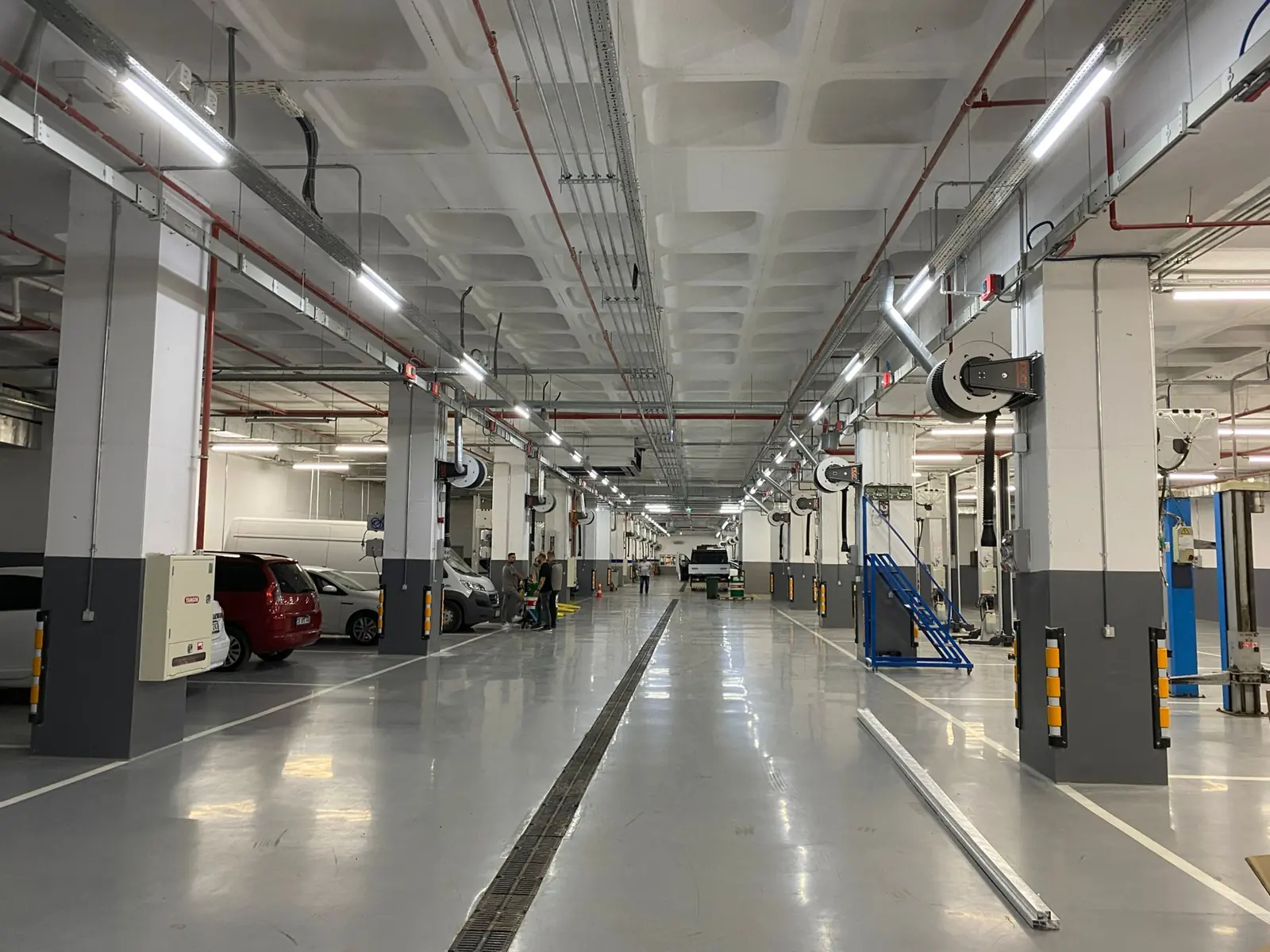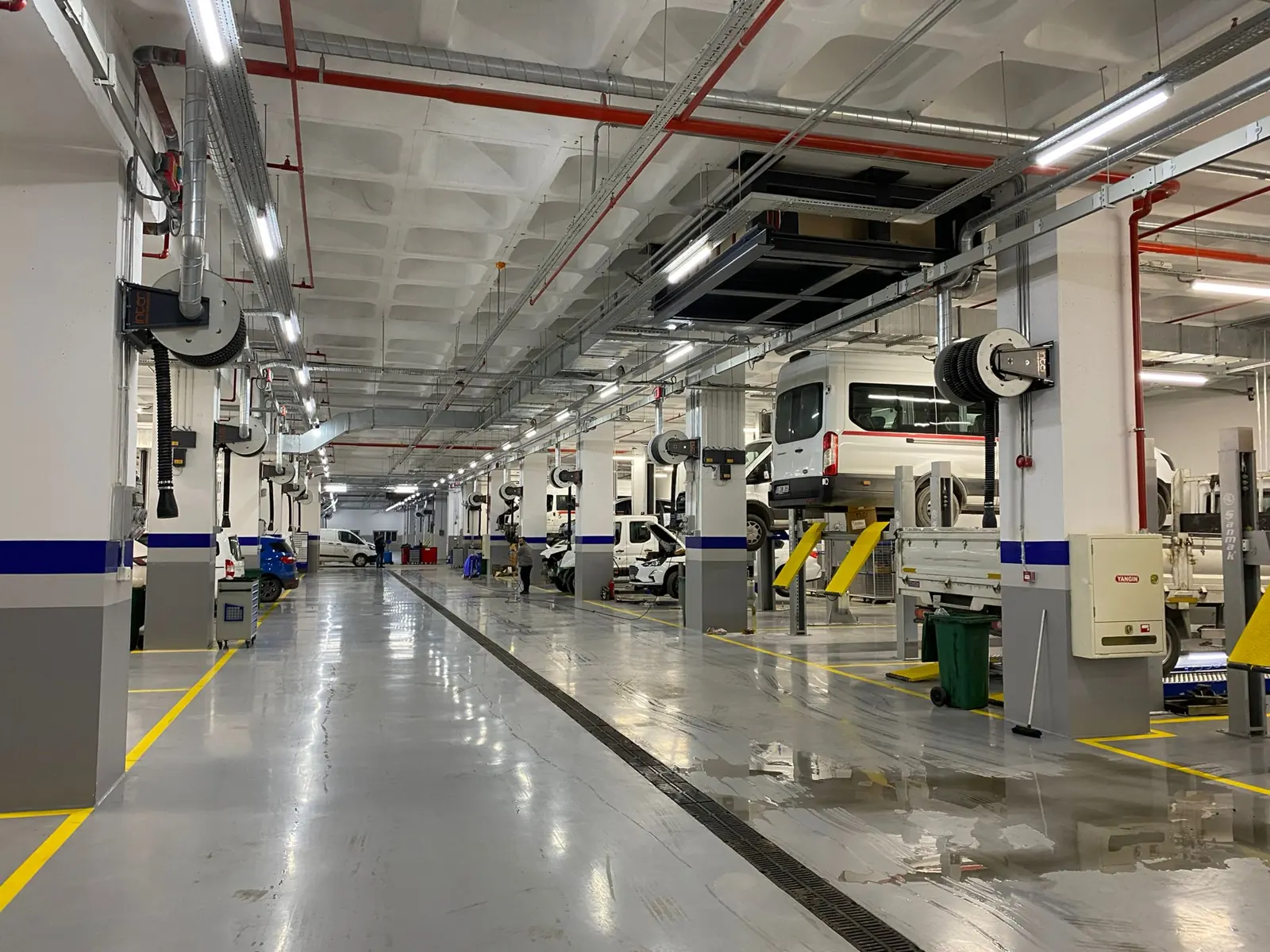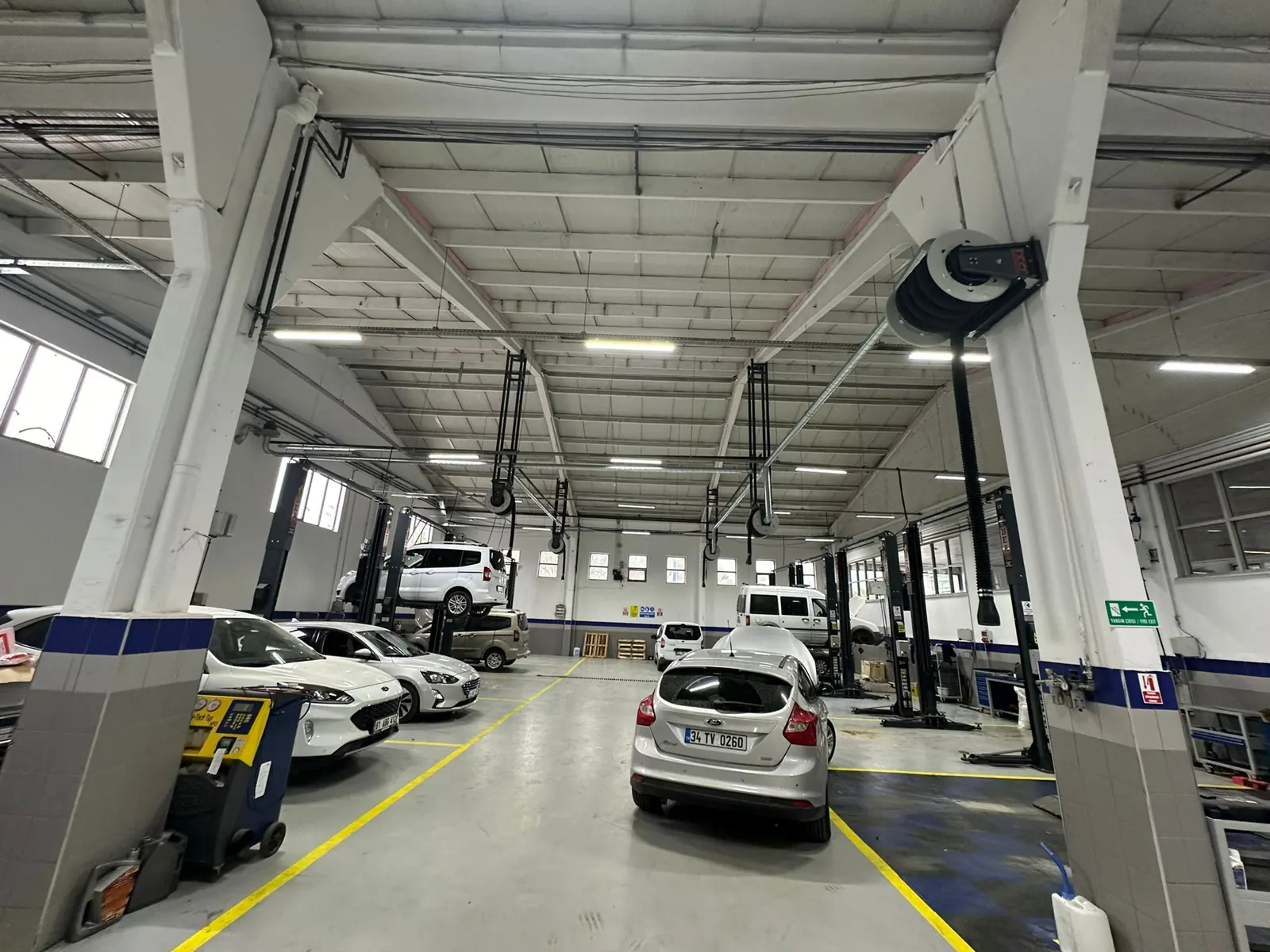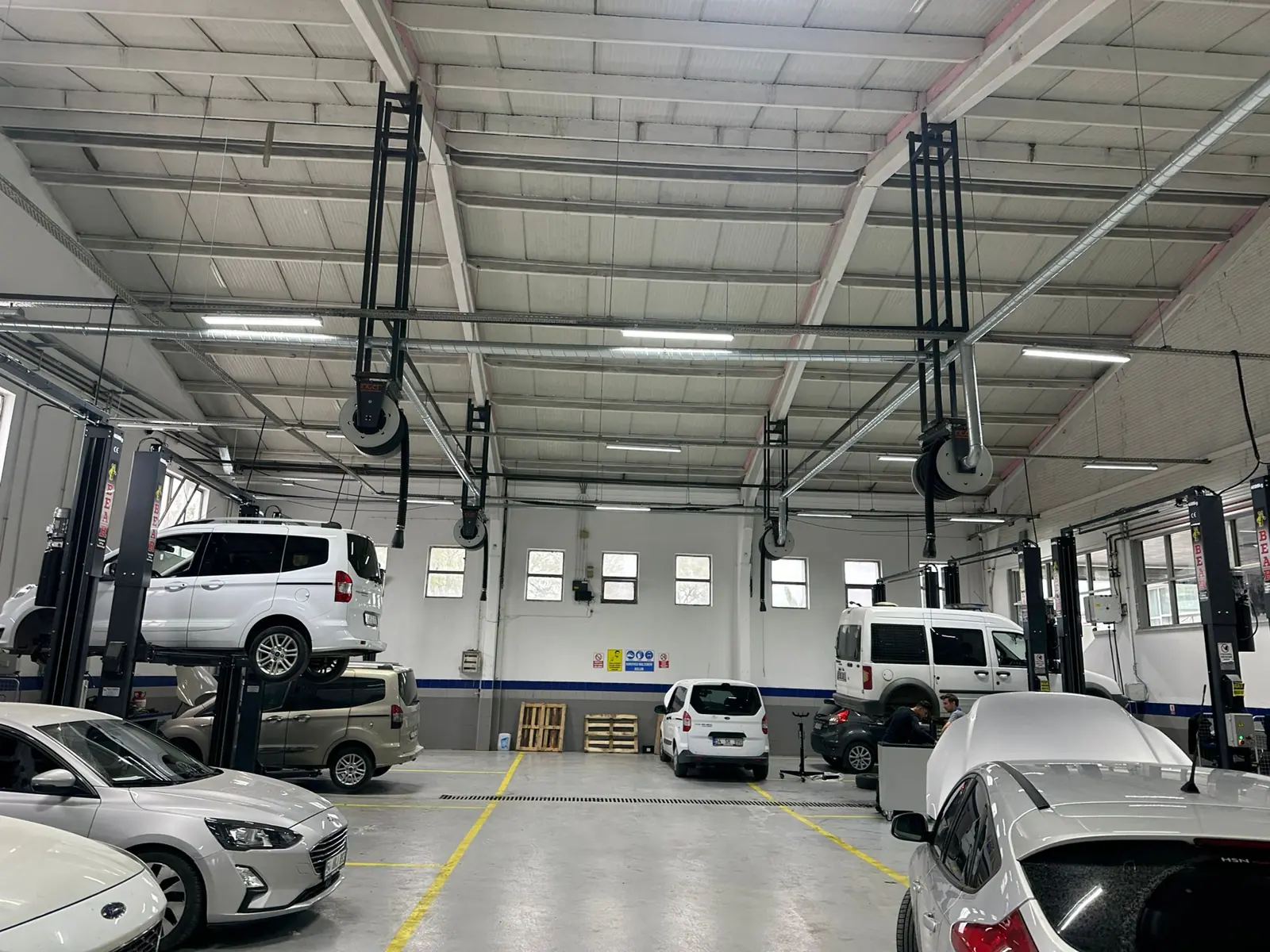
Why Should Exhaust Gas Be Captured at Source in the Workshop?
Even with the engine idling, carbon monoxide, nitrogen oxides and, in diesel vehicles, fine particles are released. In an enclosed workshop these gases build up quickly; headaches, fatigue and loss of concentration are the first symptoms. The International Agency for Research on Cancer (IARC), part of the World Health Organization, classified diesel engine exhaust as carcinogenic to humans (Group 1) in 2012.
The Turkish Occupational Health and Safety Law No. 6331 and the regulation on work with chemical substances require employers to control harmful agents to which employees are exposed primarily at source. A vehicle exhaust extraction system is the most direct way of doing this: the gas is captured before it mixes with the workshop air.
How Does the System Work?
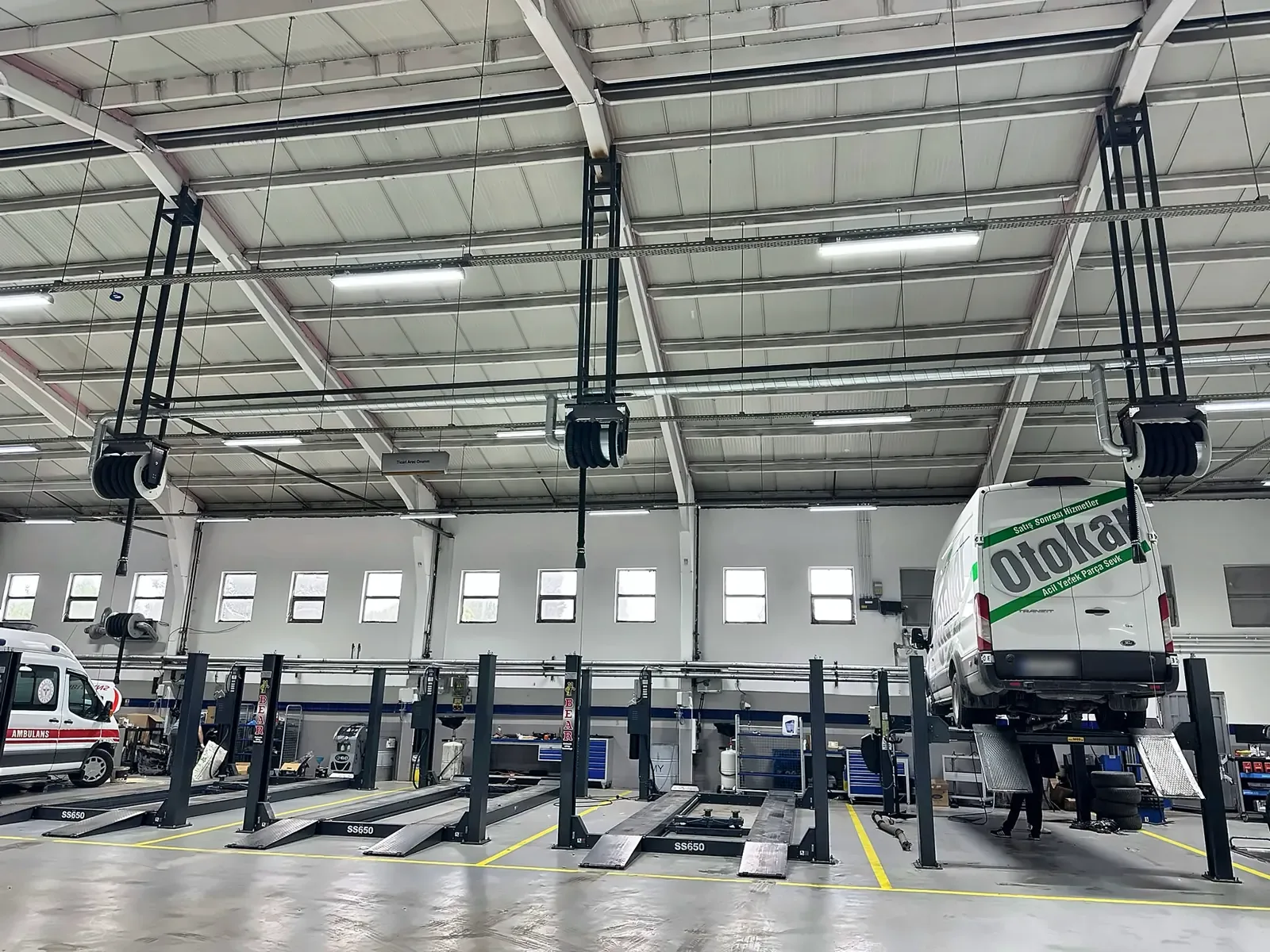
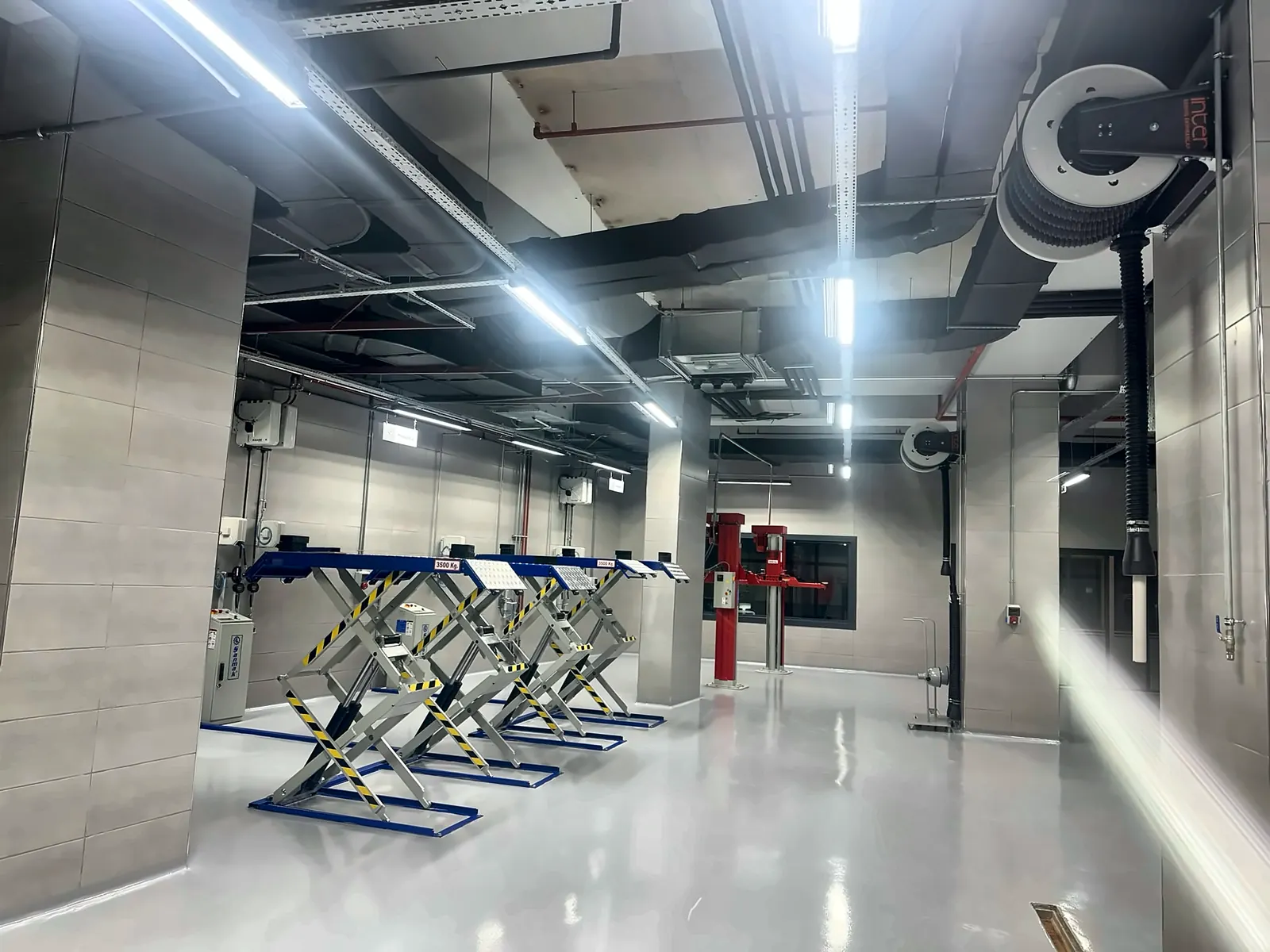
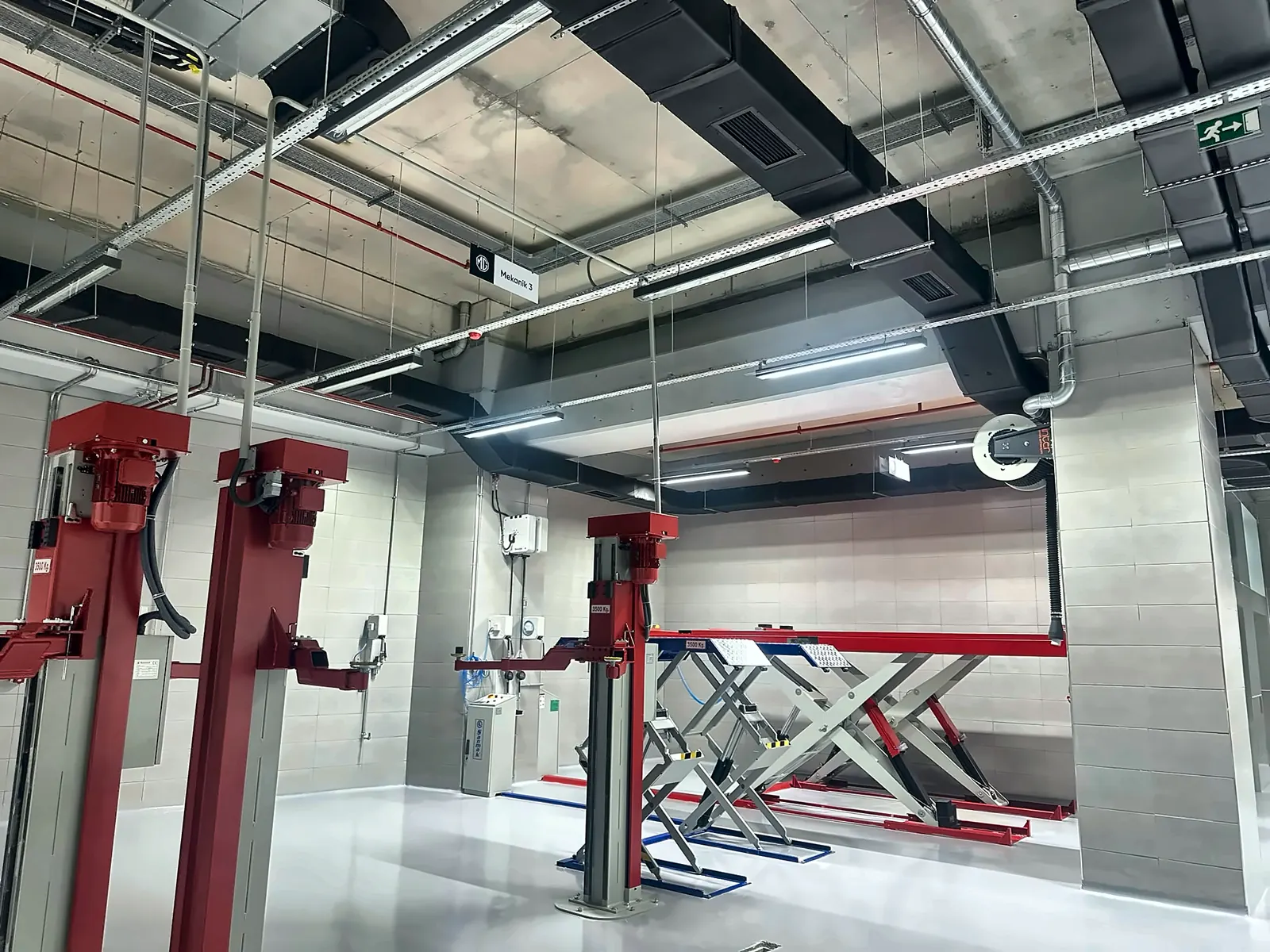
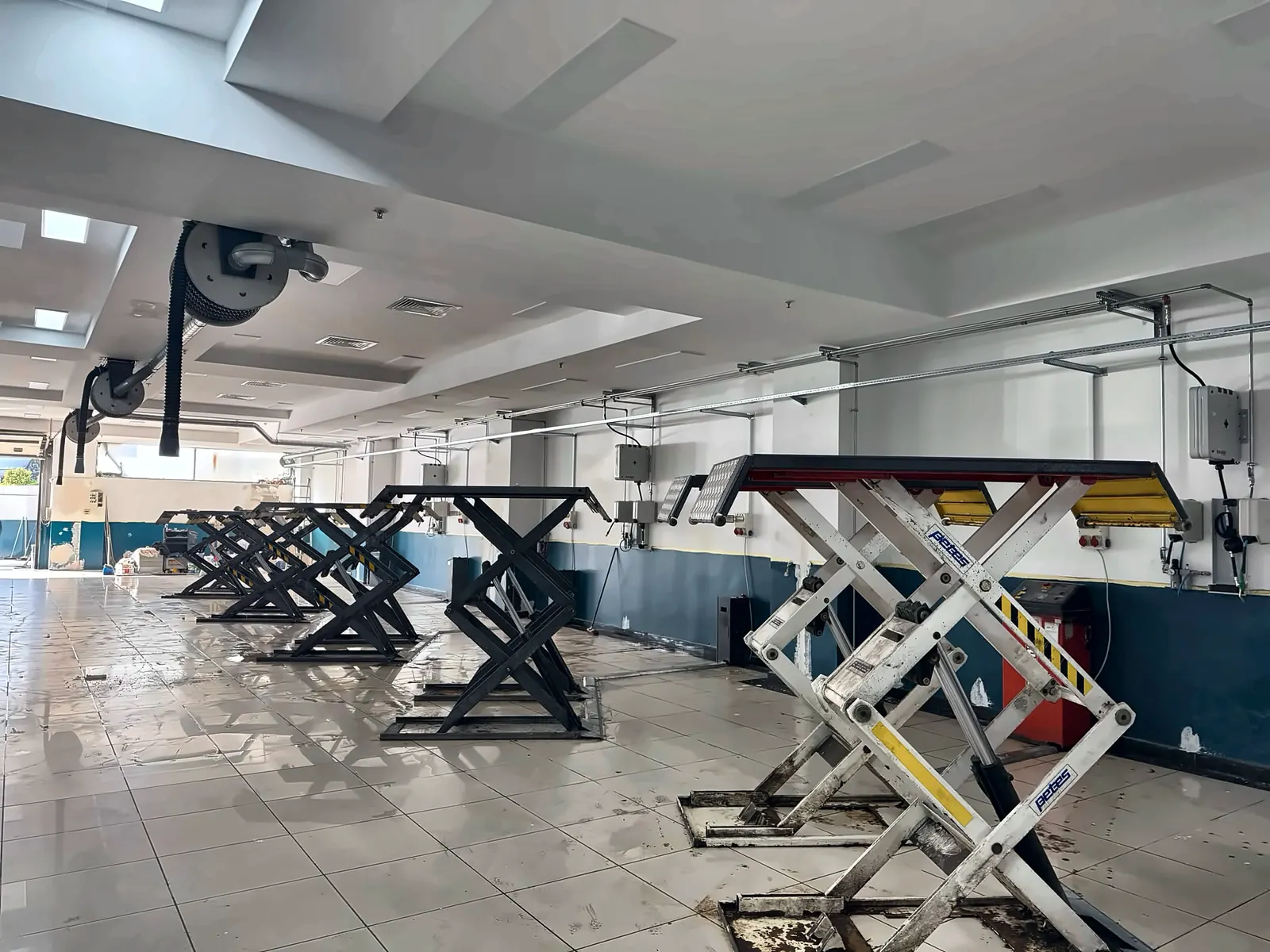
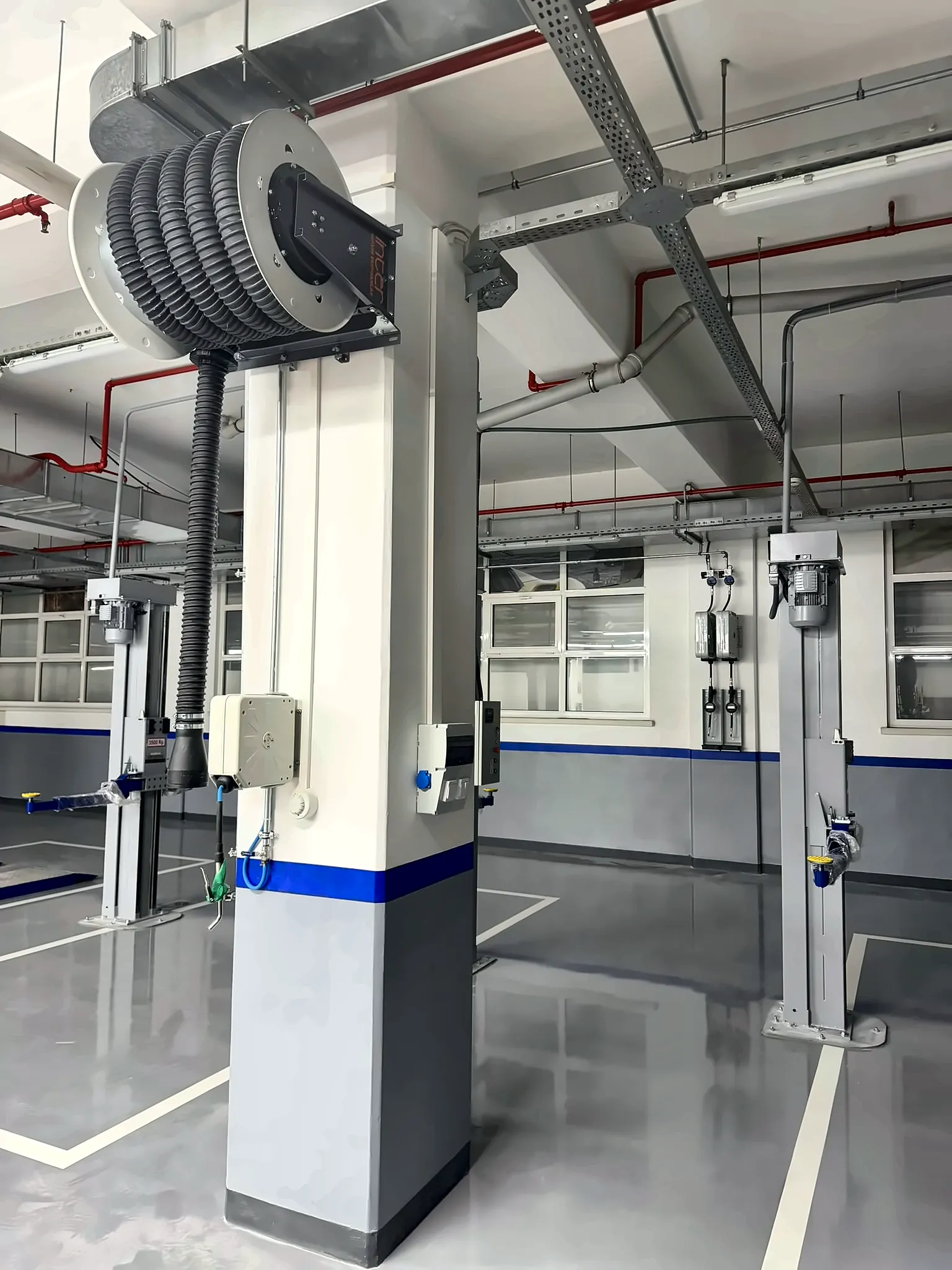
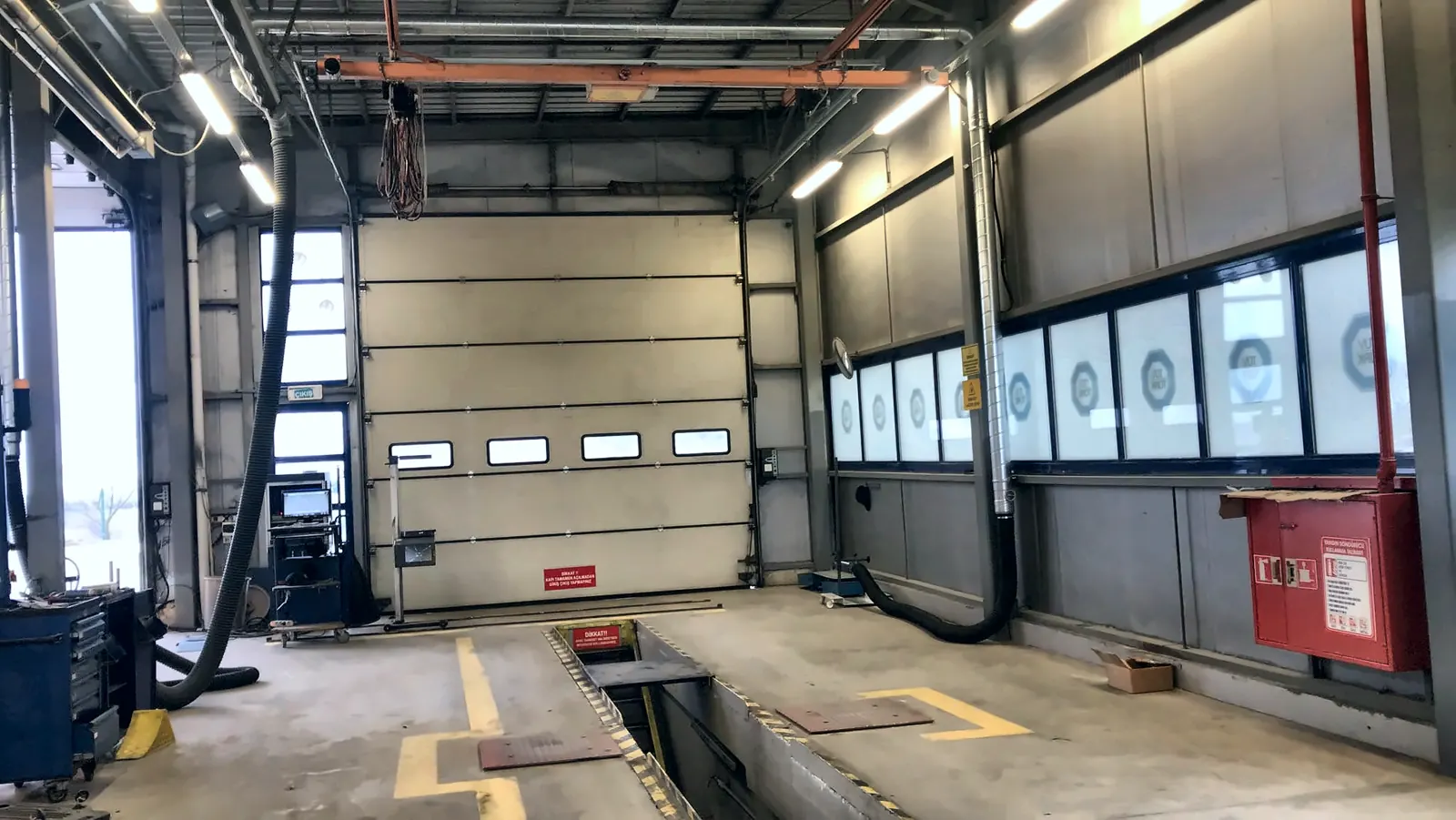
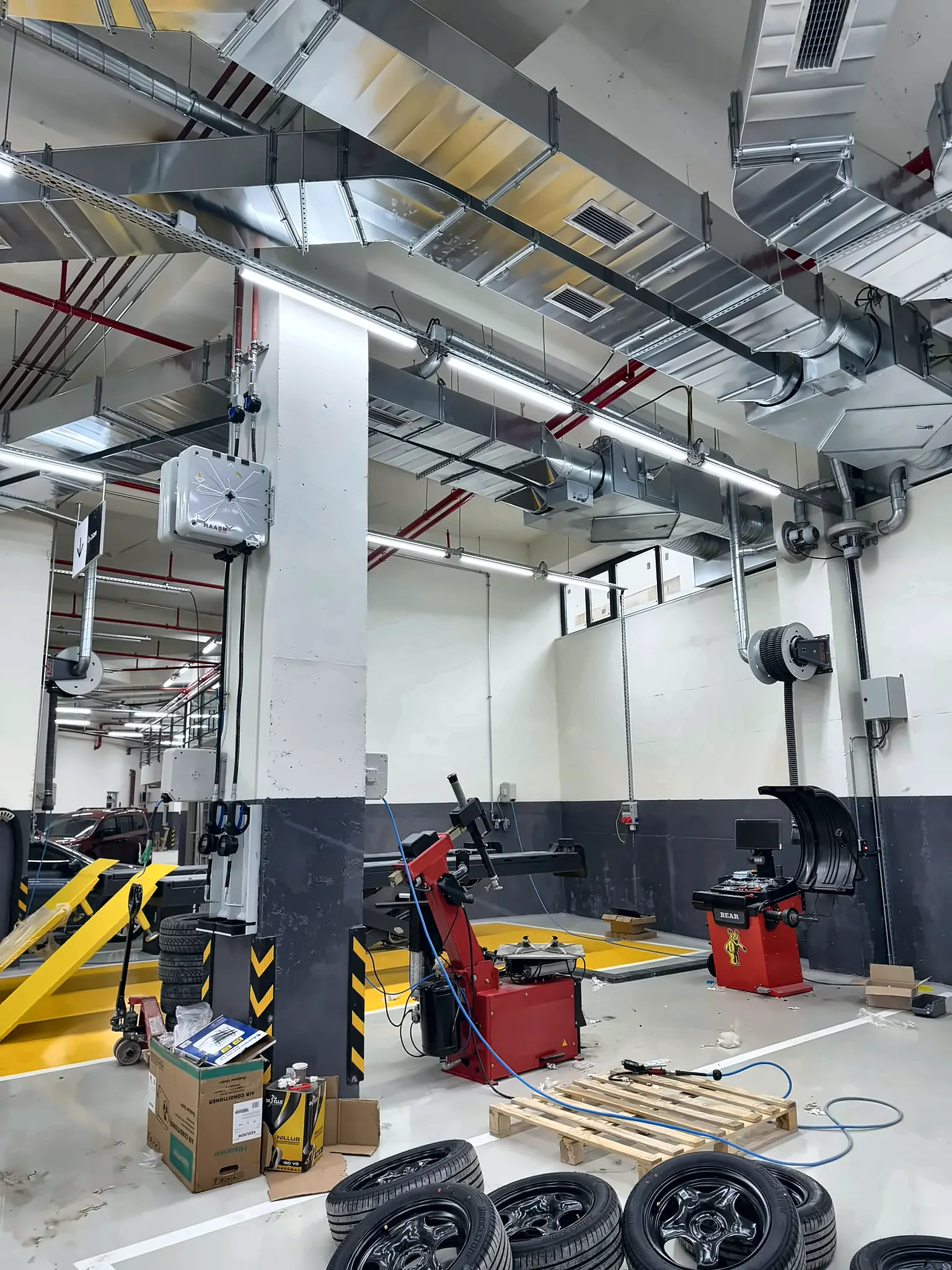
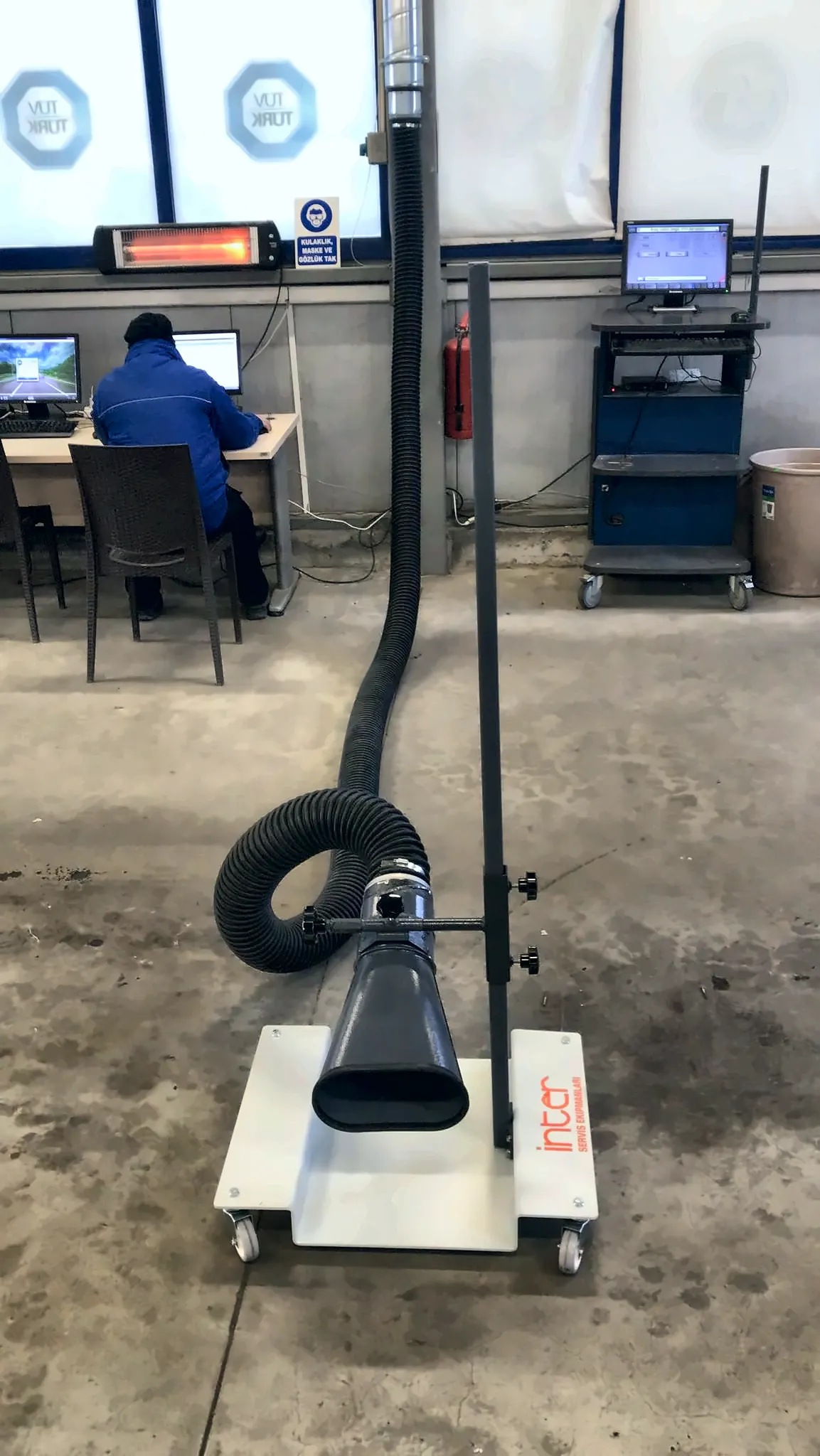
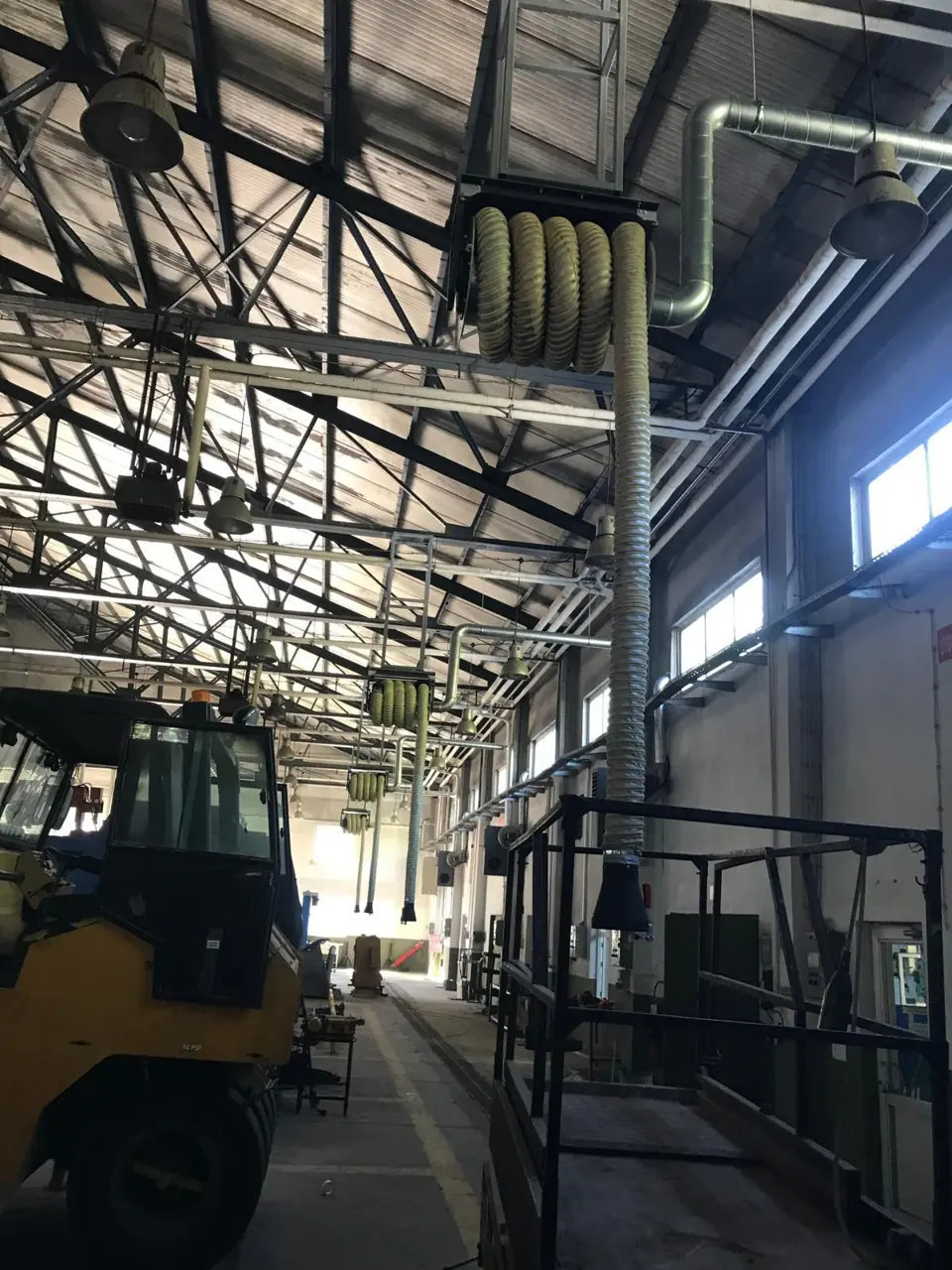
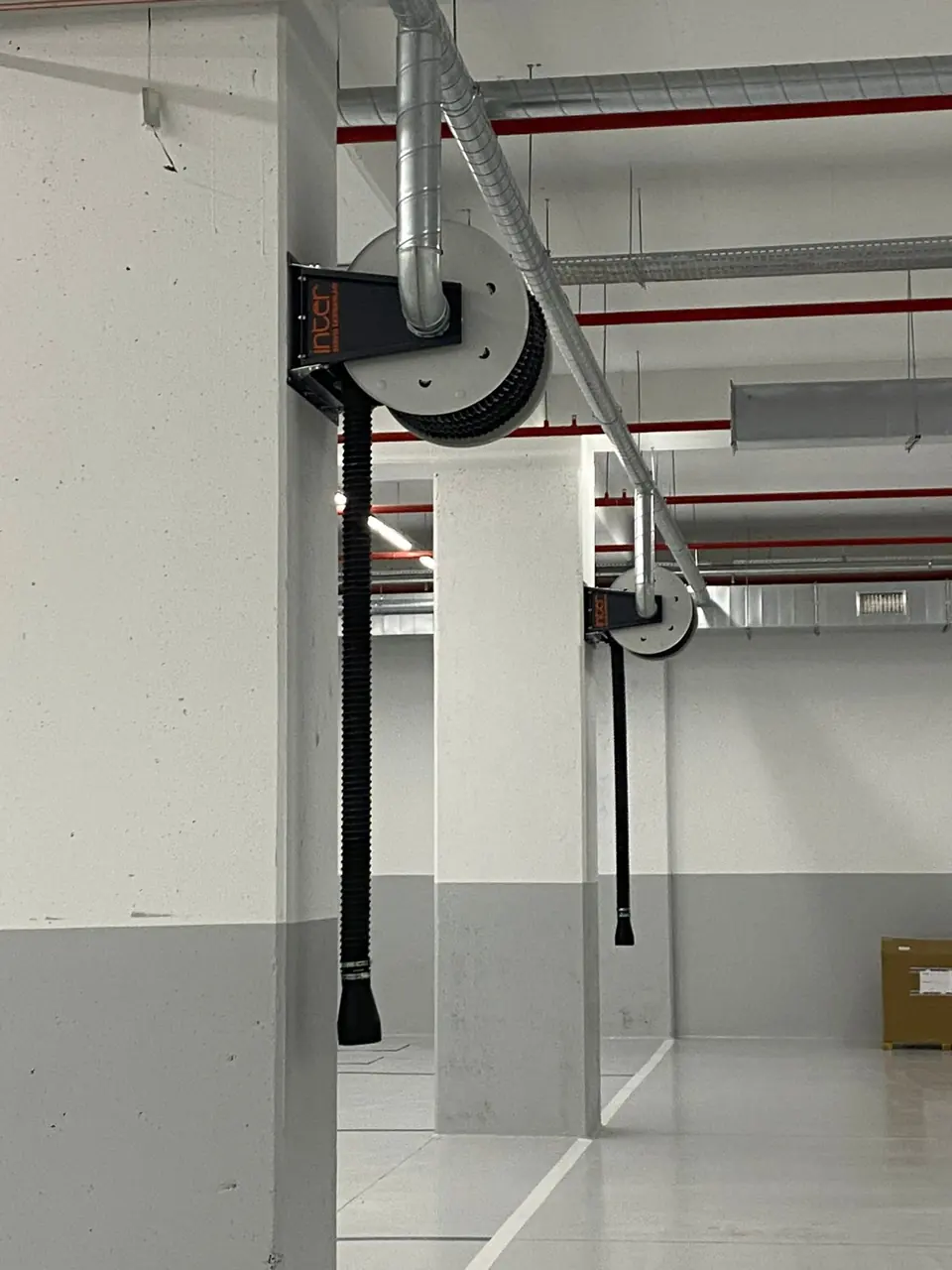
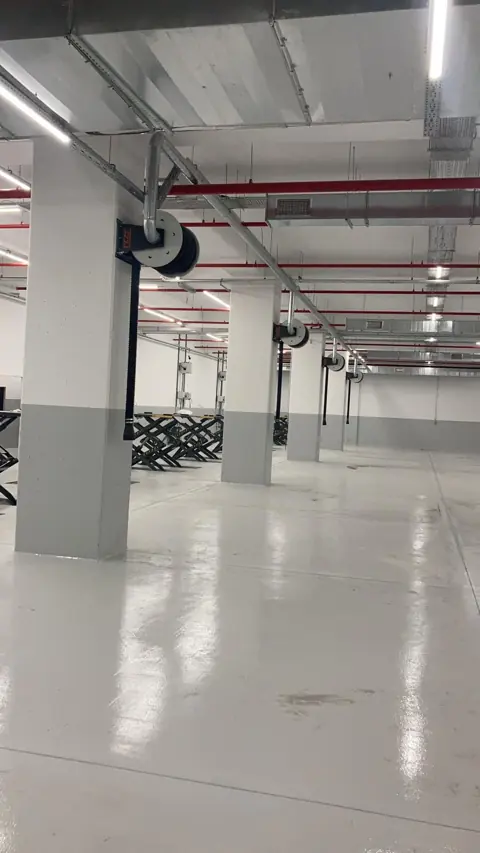
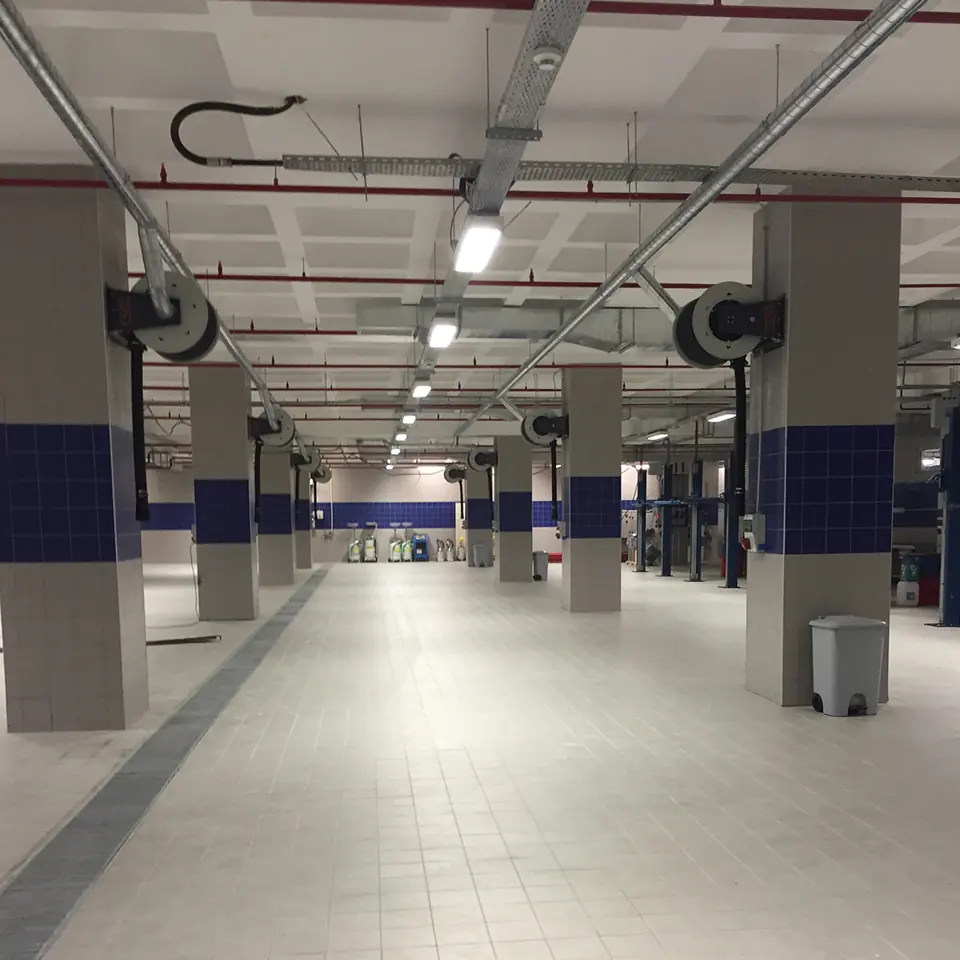
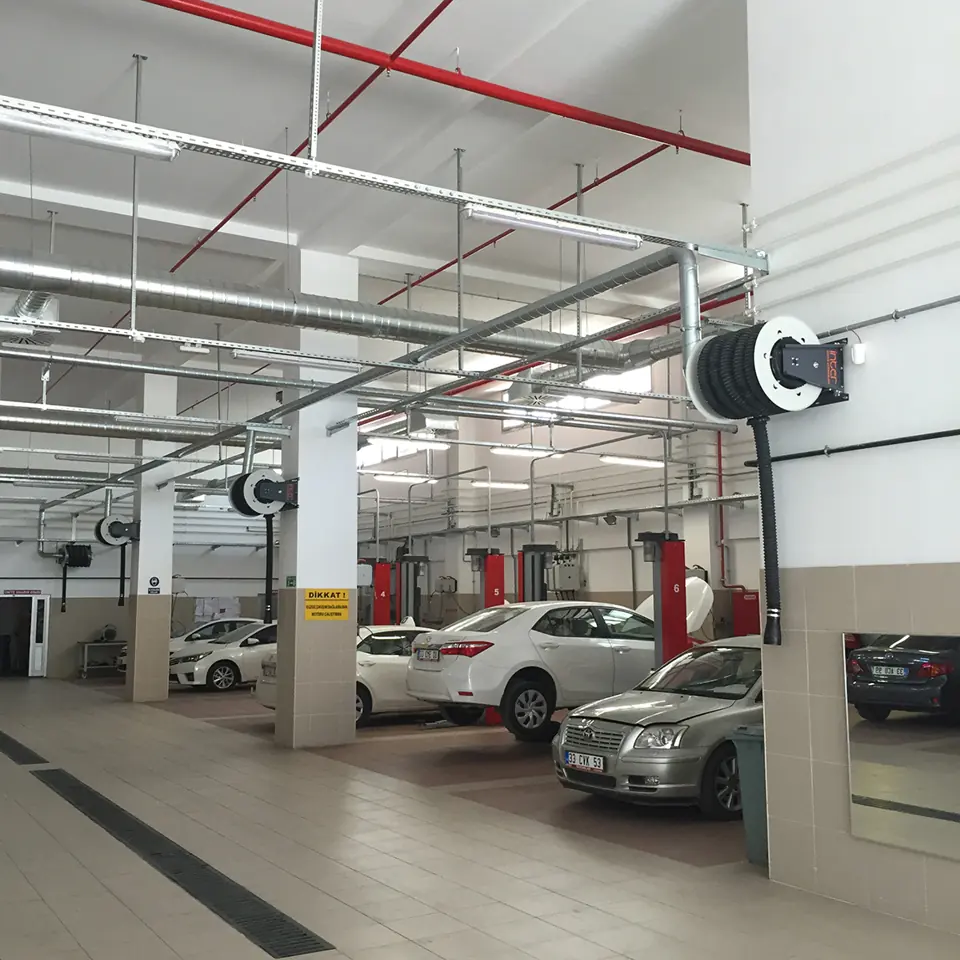
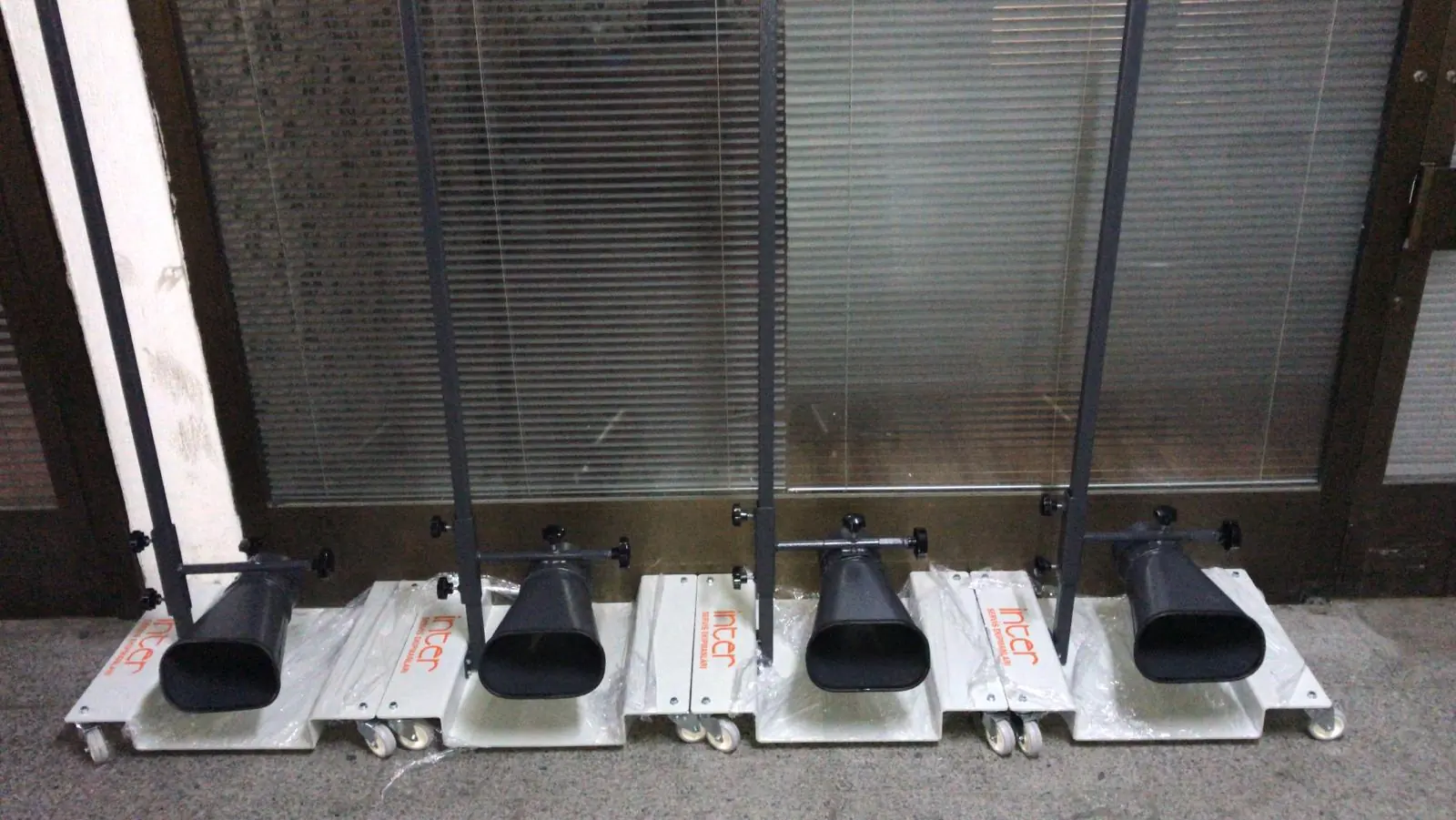
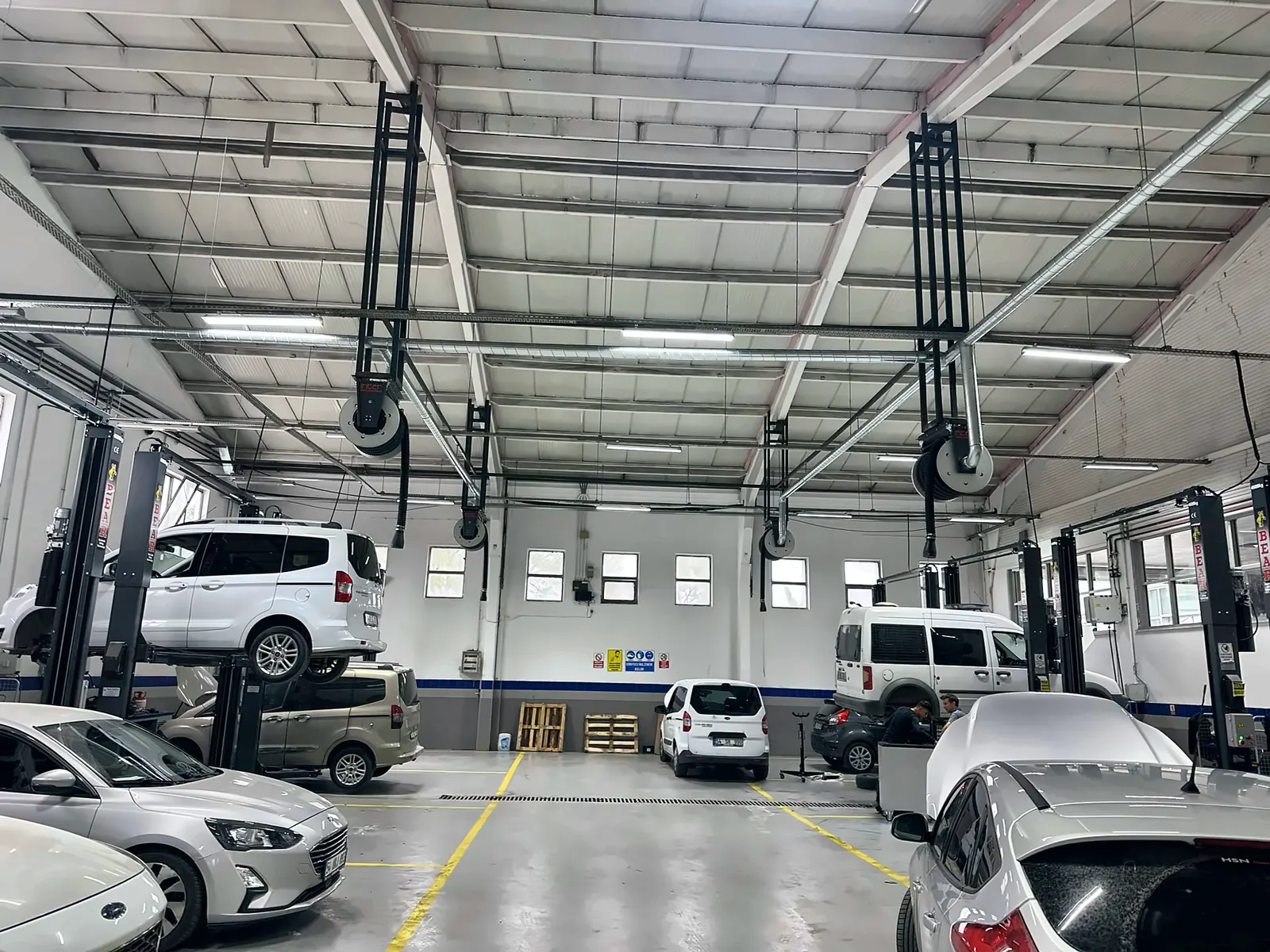
The nozzle at the end of the hose is fitted to the vehicle’s tailpipe. The extraction fan draws the gas through the hose and duct and discharges it outside the building. Unlike general ventilation, only the contaminated gas is moved; as a result, indoor air heated in winter and cooled in summer is not needlessly expelled, and the fan capacity can be kept smaller.
System Types
Components
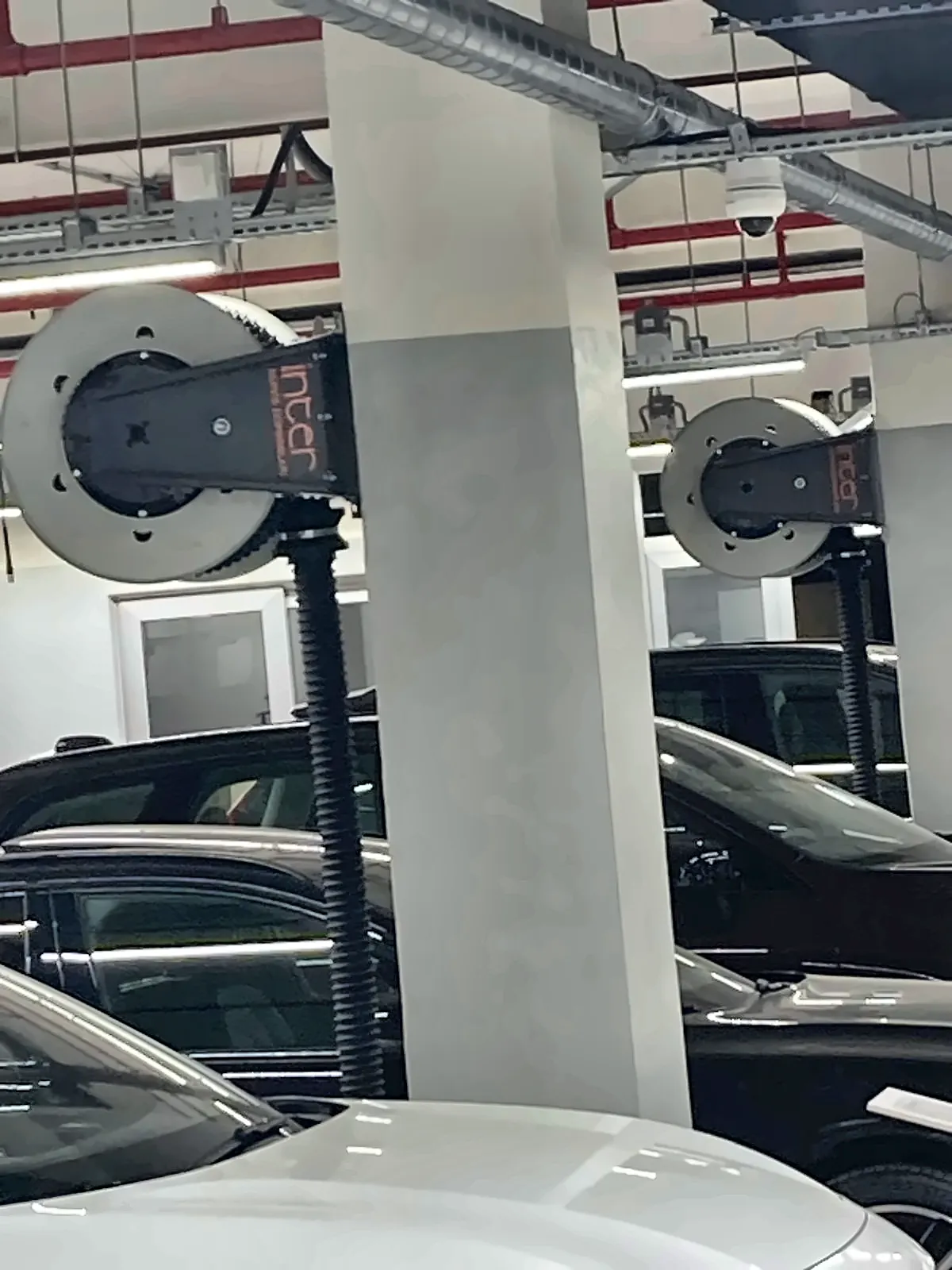
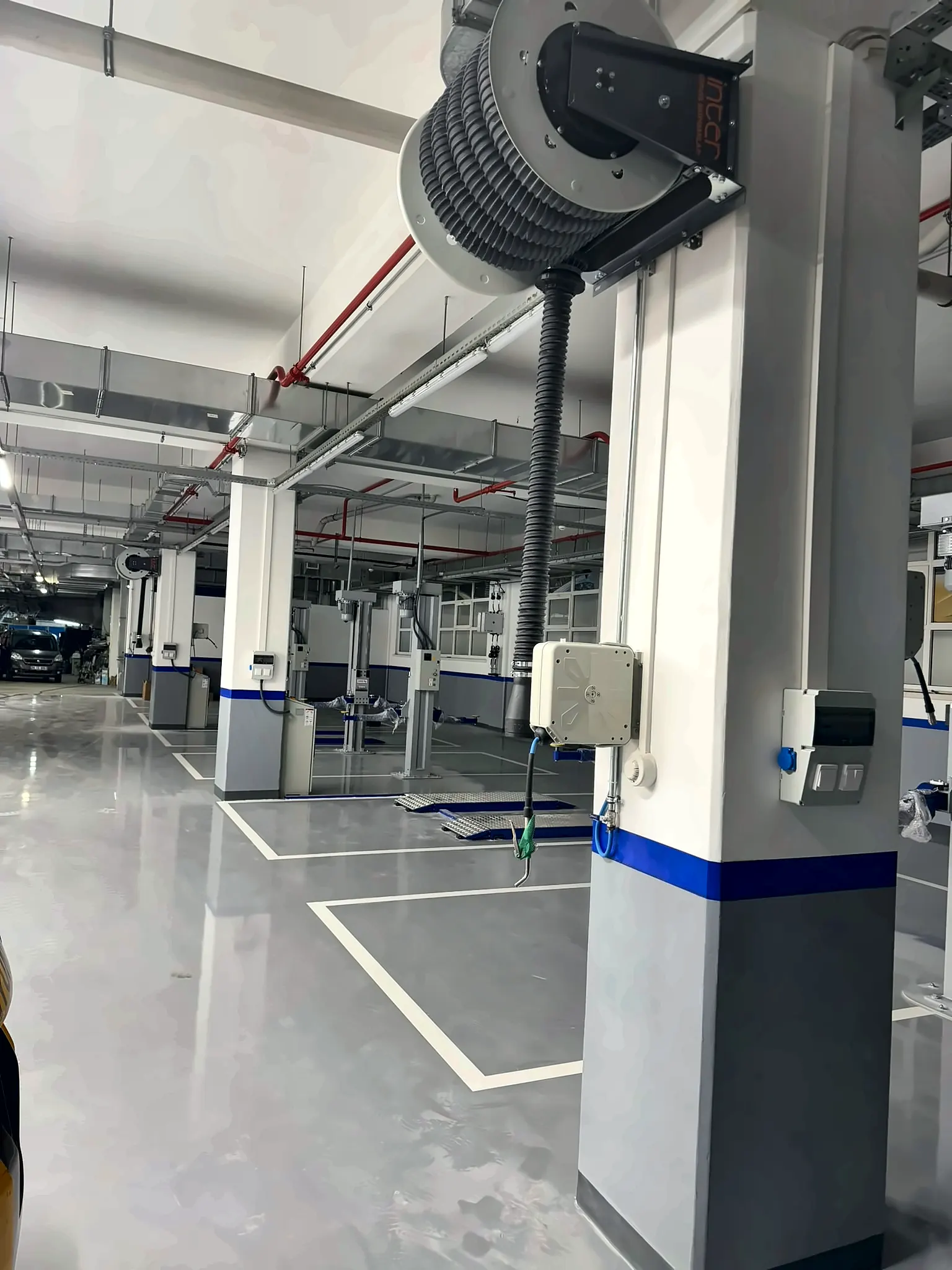
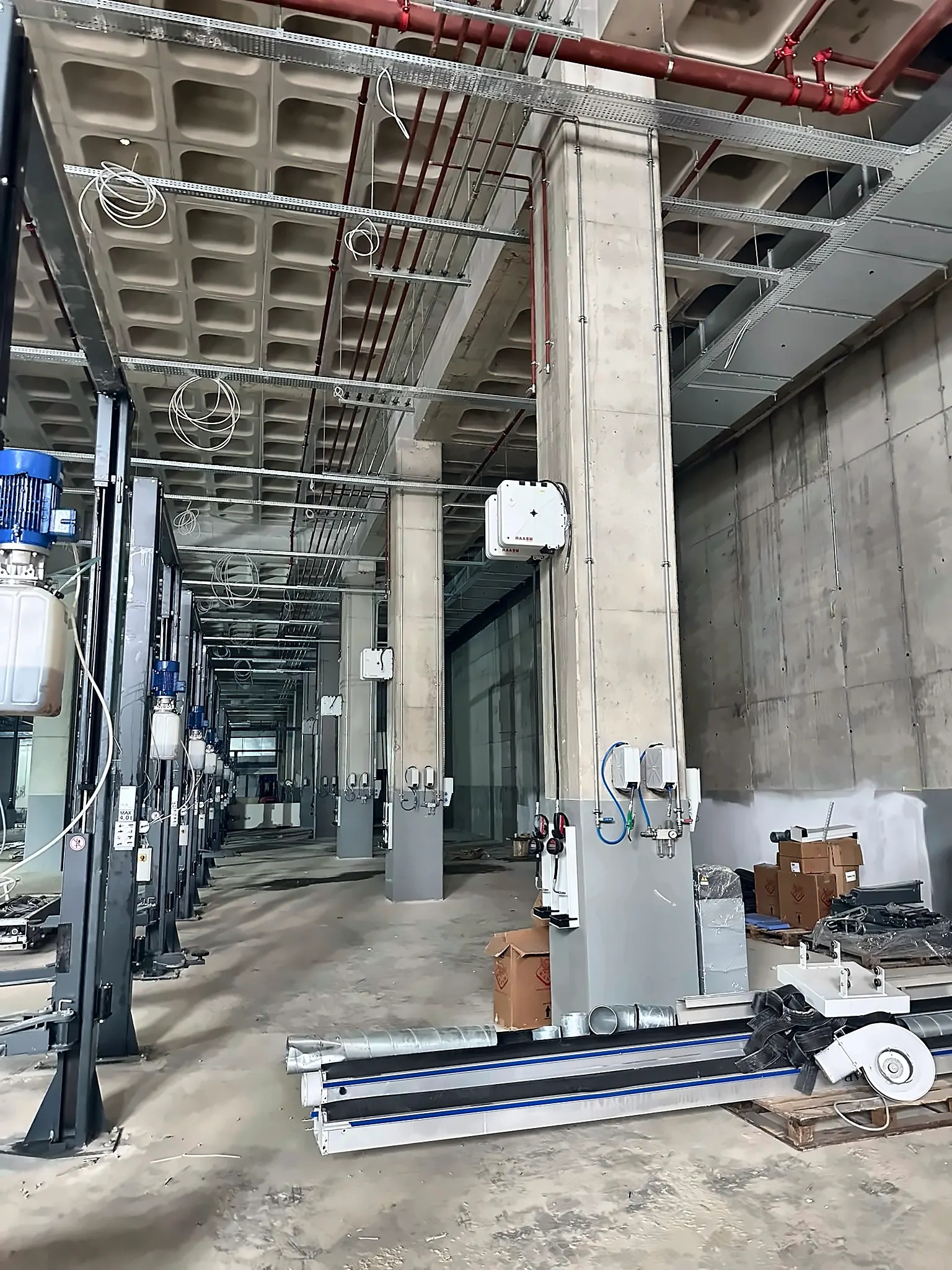
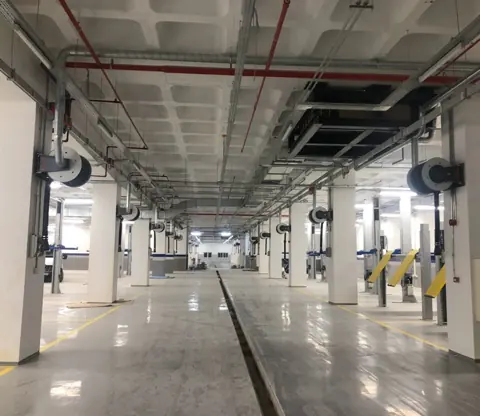
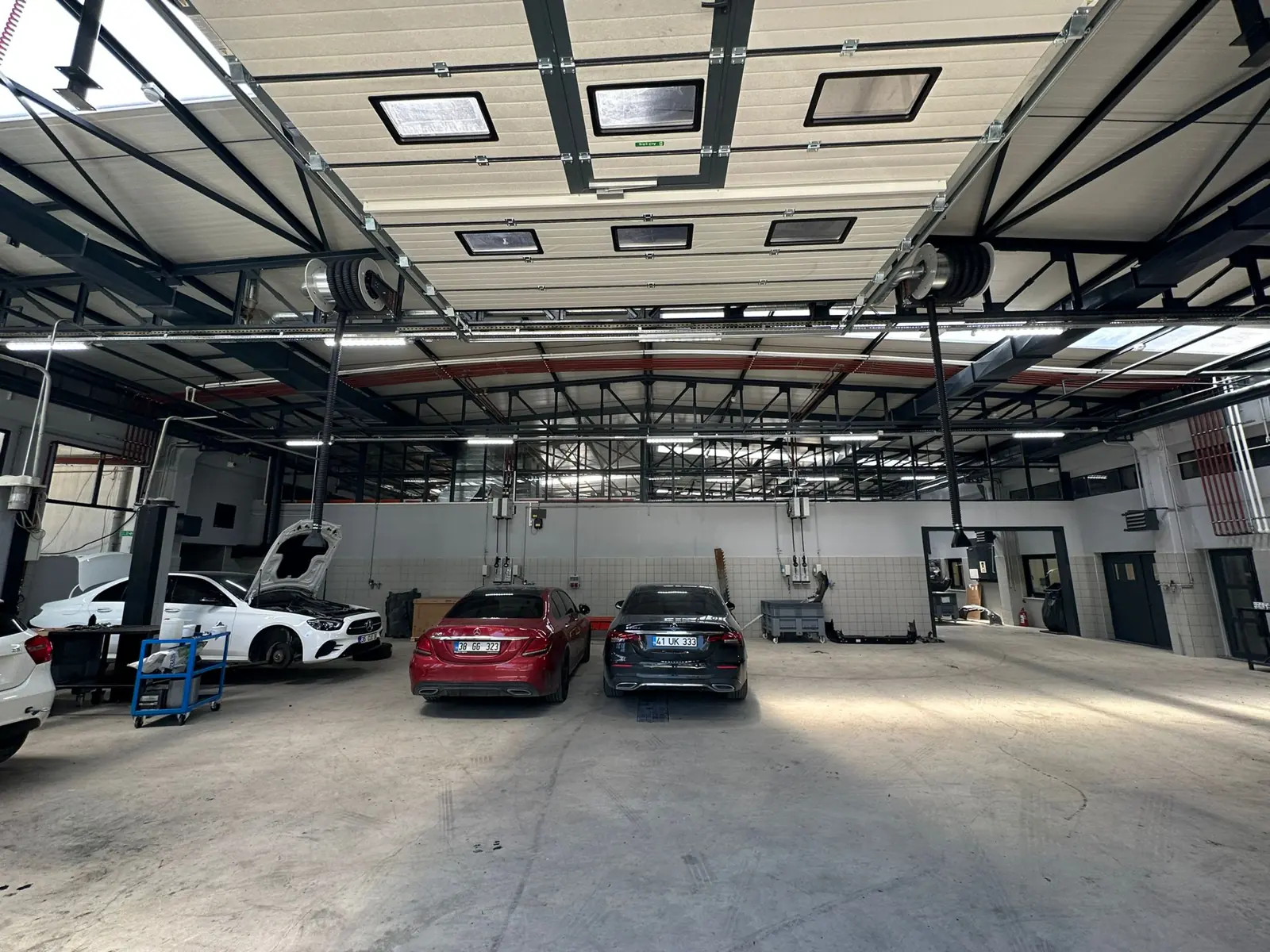
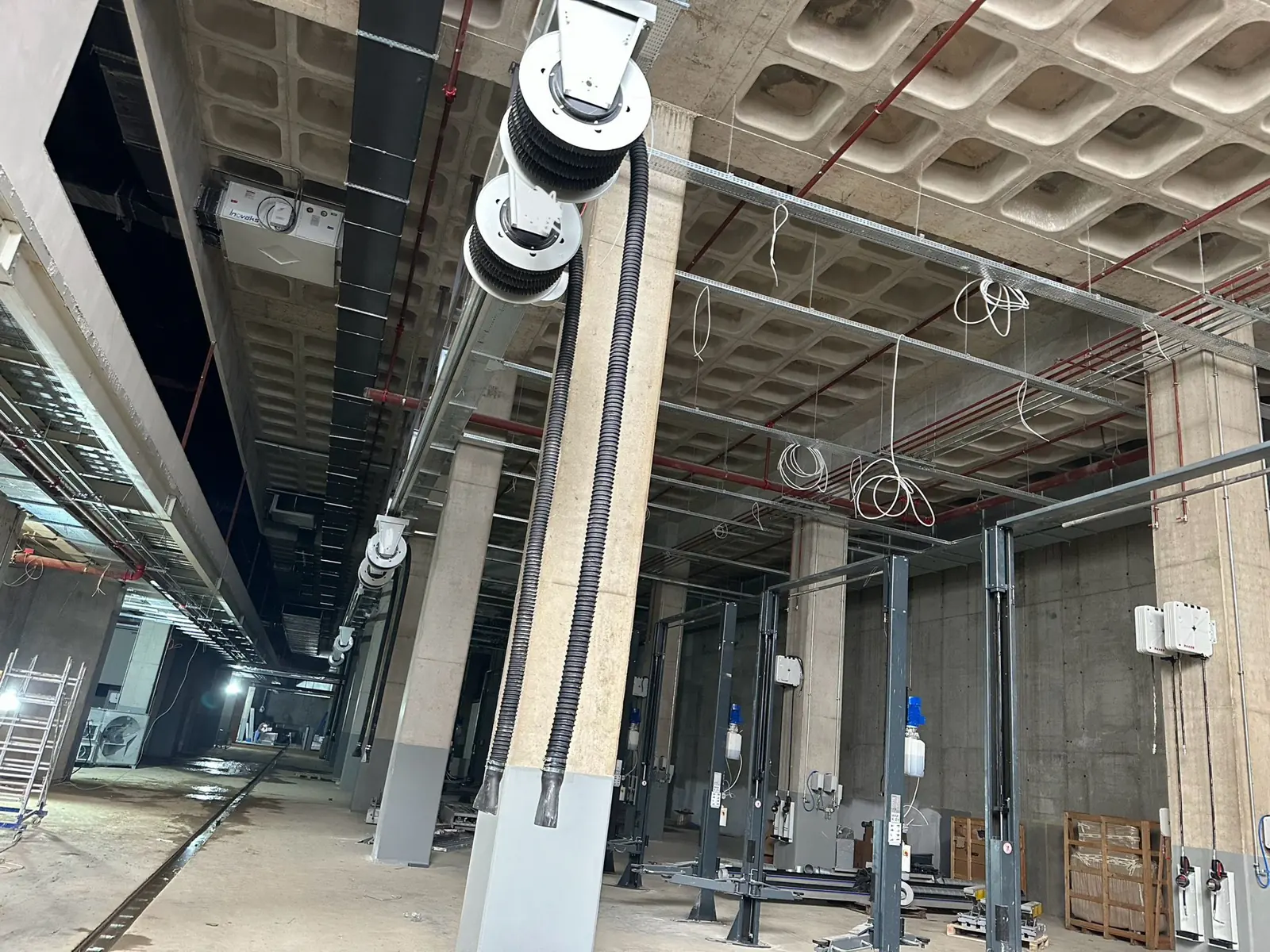
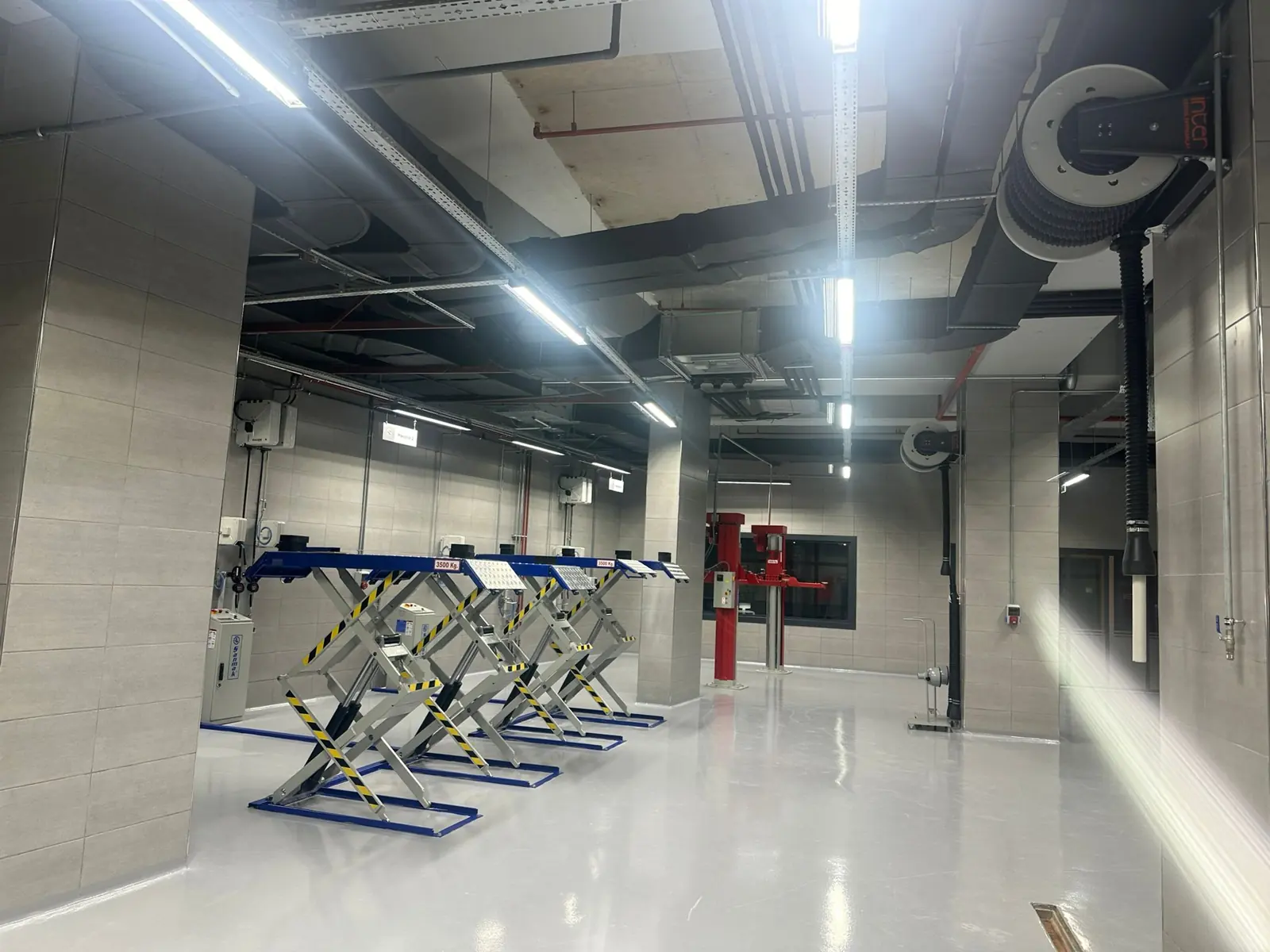
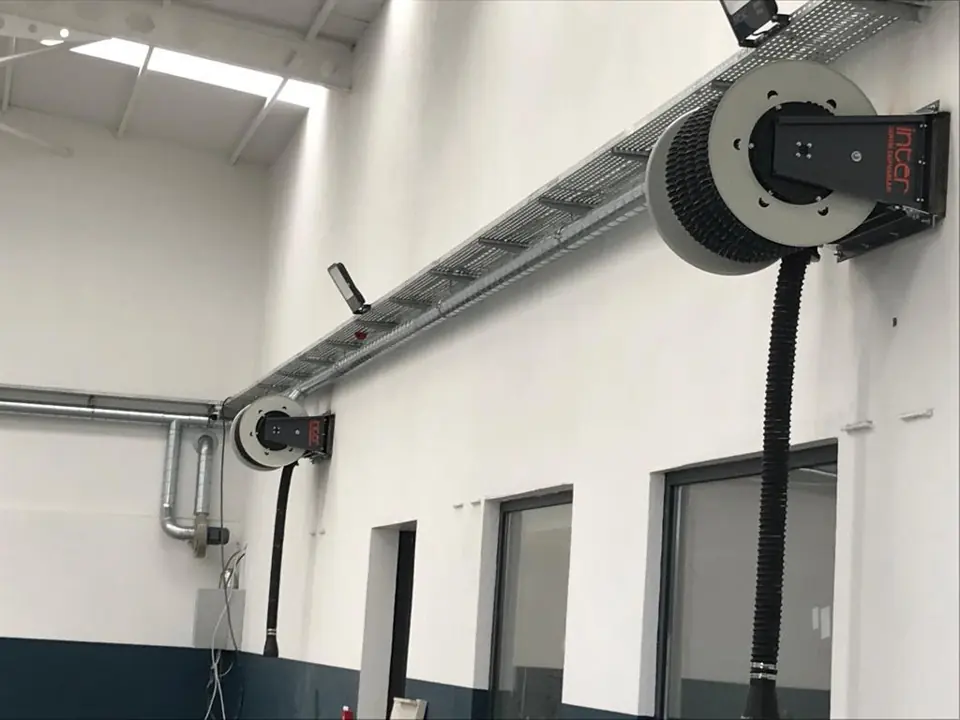
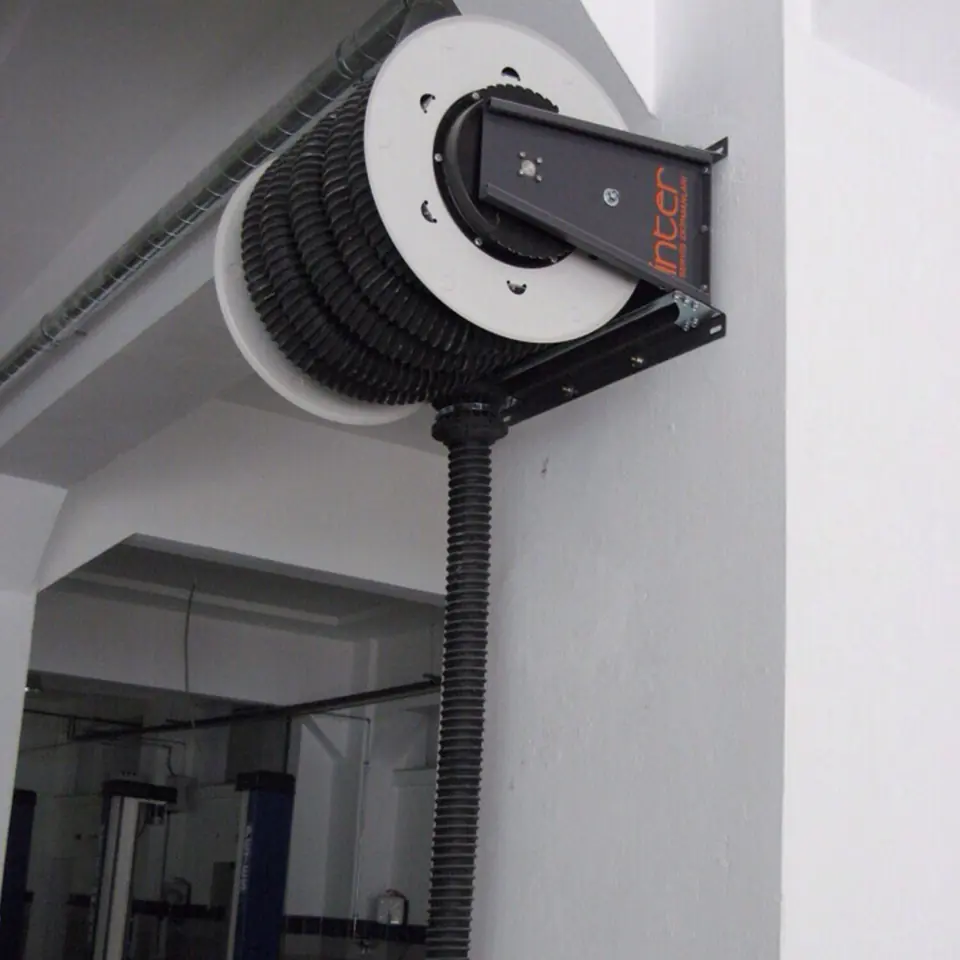
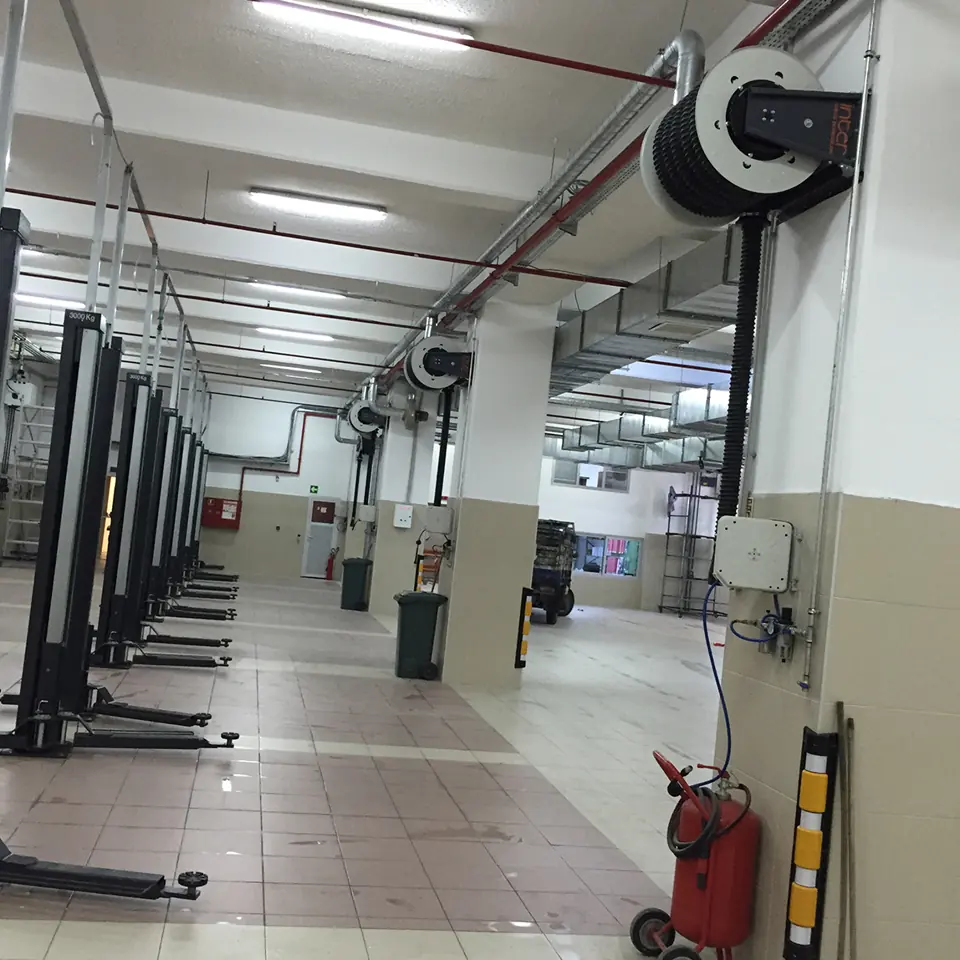
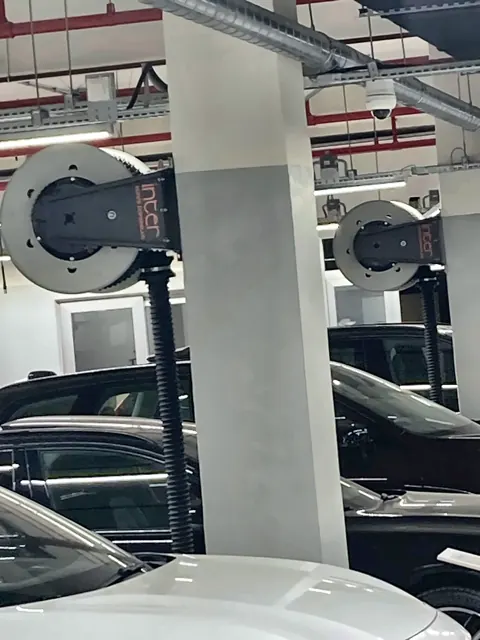
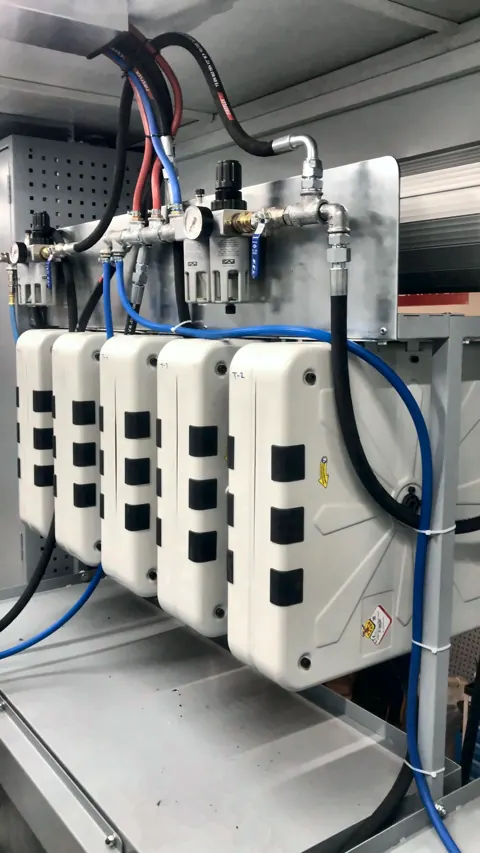
- Spring-return or motorised exhaust hose reel
- High-temperature-resistant exhaust hose
- Round, oval or twin-outlet nozzle depending on the tailpipe type
- Extraction fan and fan control
- Ducting, elbows and connections for discharge outside the building
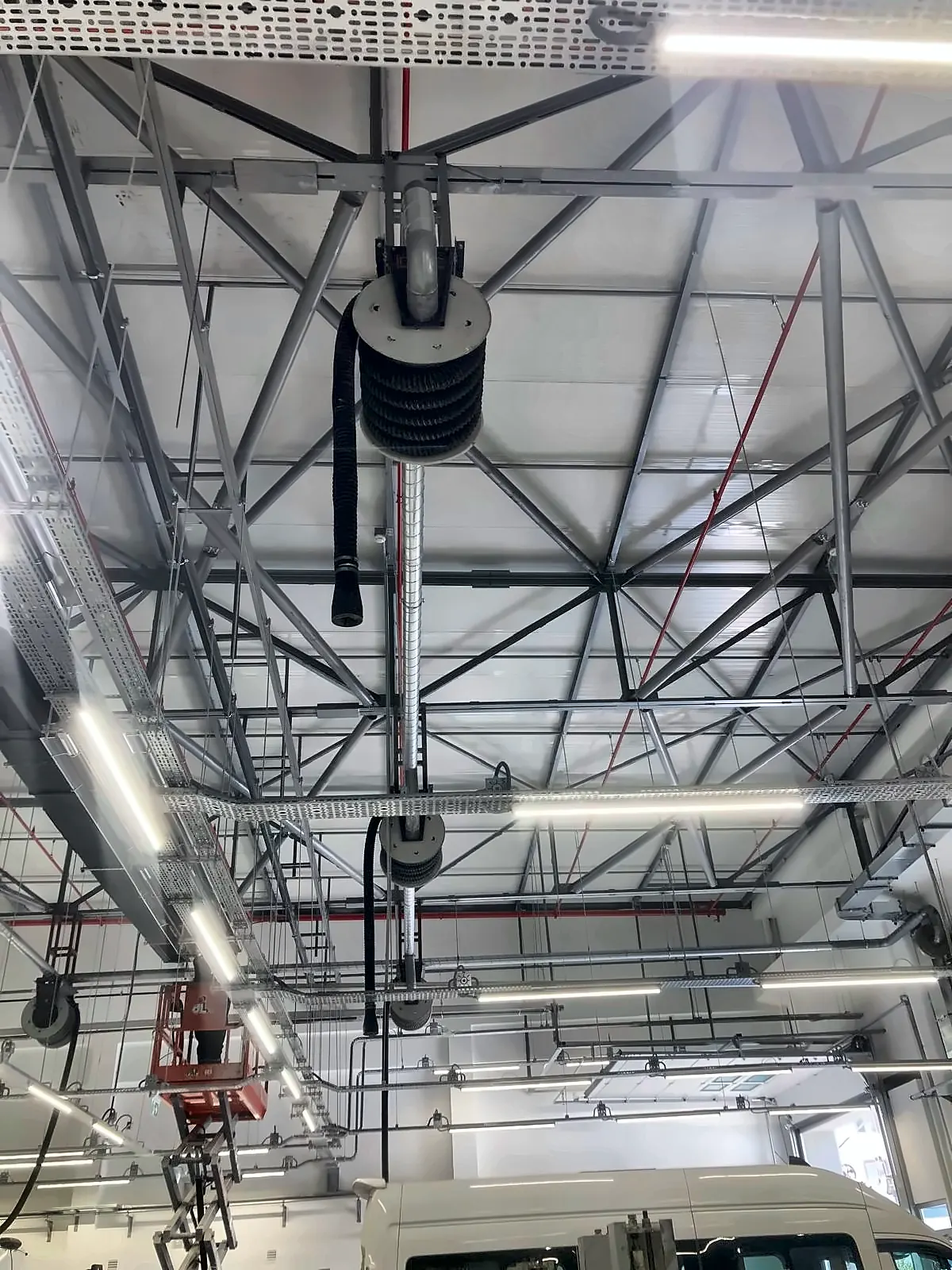
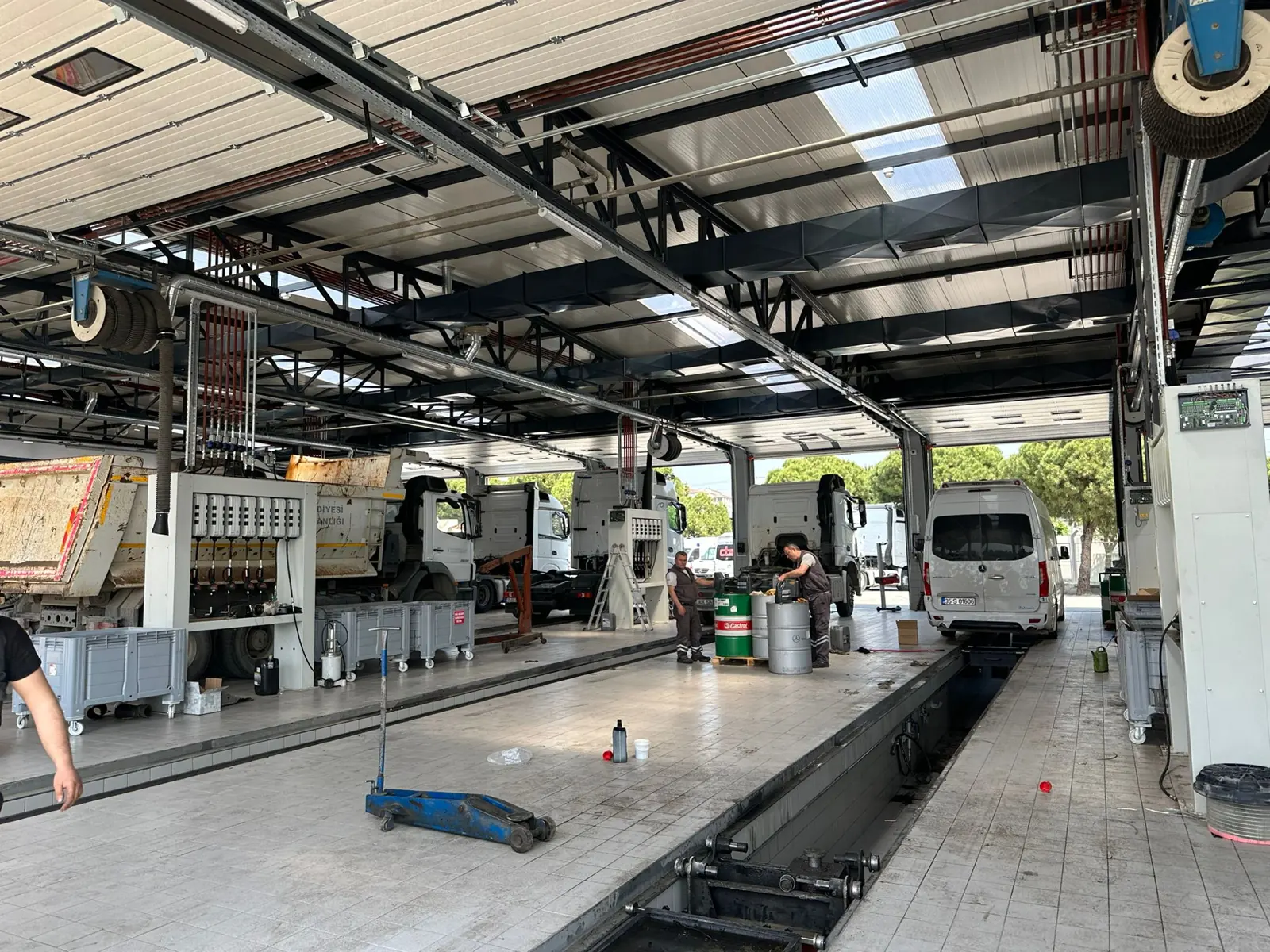
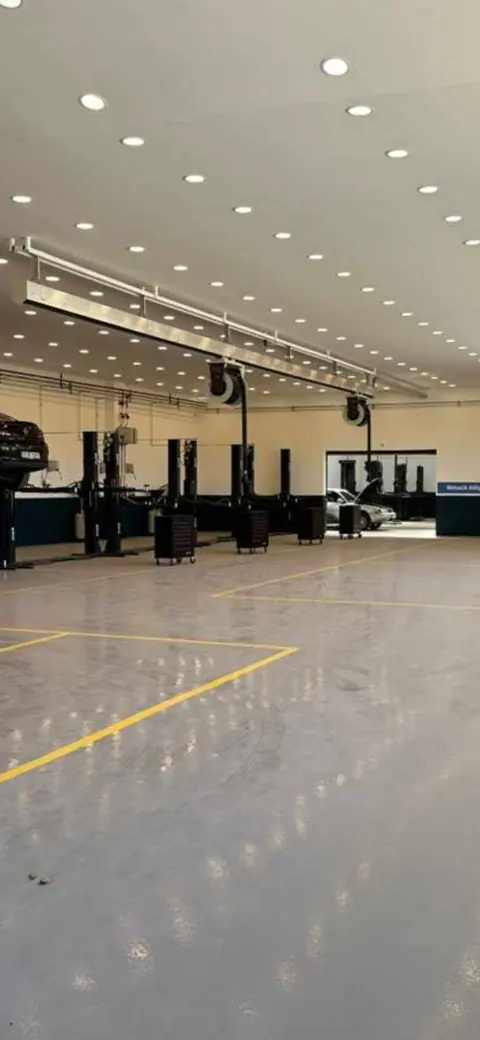
- For rail systems: rail profile, trolleys and safety release part
What Do We Look at When Choosing the Right System?
During the site survey we work out the answers to the following questions together; fan capacity, hose diameter and duct routing are calculated on this basis:
- Number and layout of lifts and workstations, and ceiling height
- Vehicle types: cars, light commercial vehicles, trucks, buses; whether there are vehicles with vertical exhaust stacks
- Maximum number of vehicles with engines running at the same time
- Where the duct will exit the building and any clashes with existing installations
- Whether there is a test lane, idle adjustment or emissions testing area
Who Is It For?
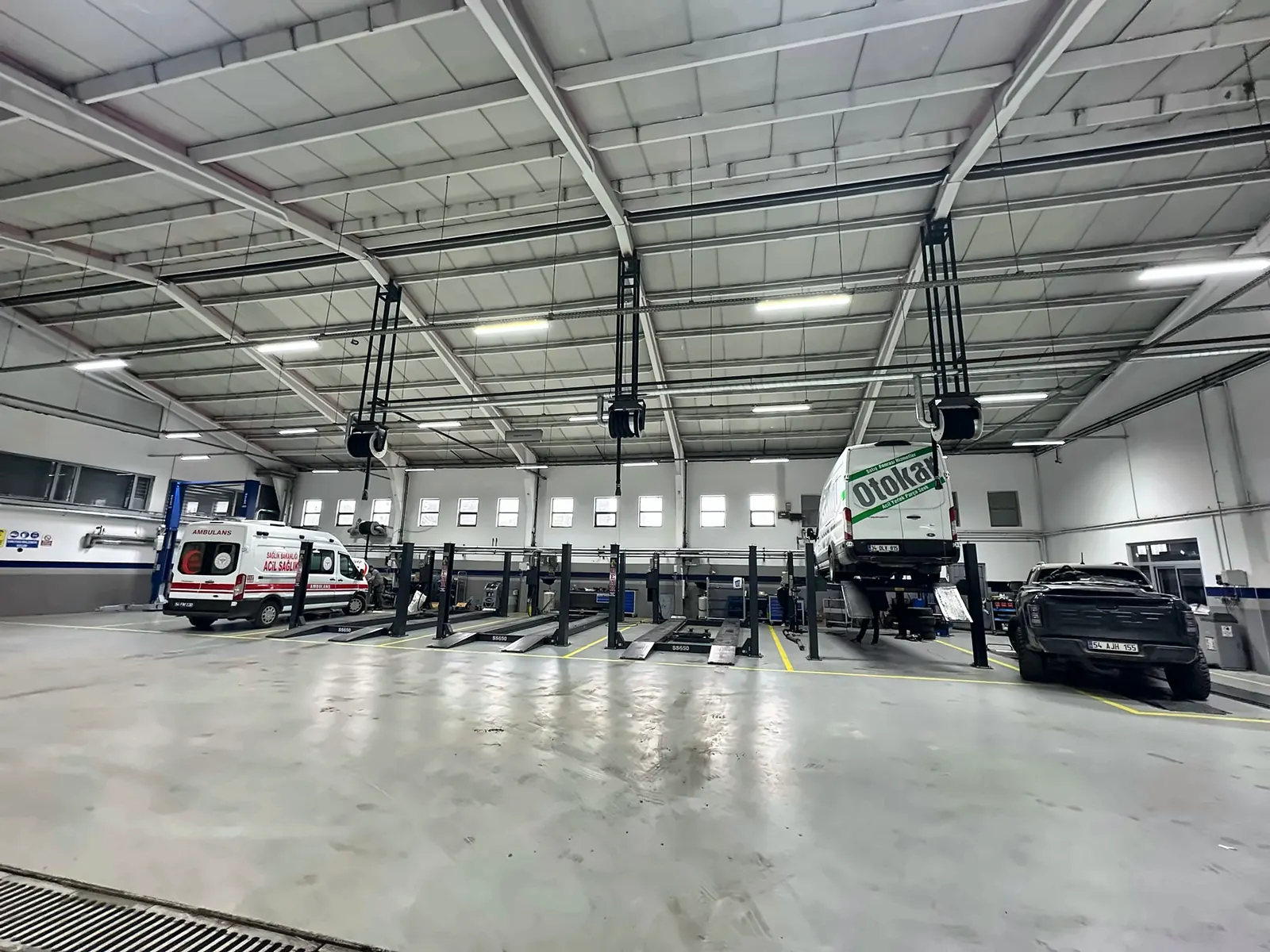
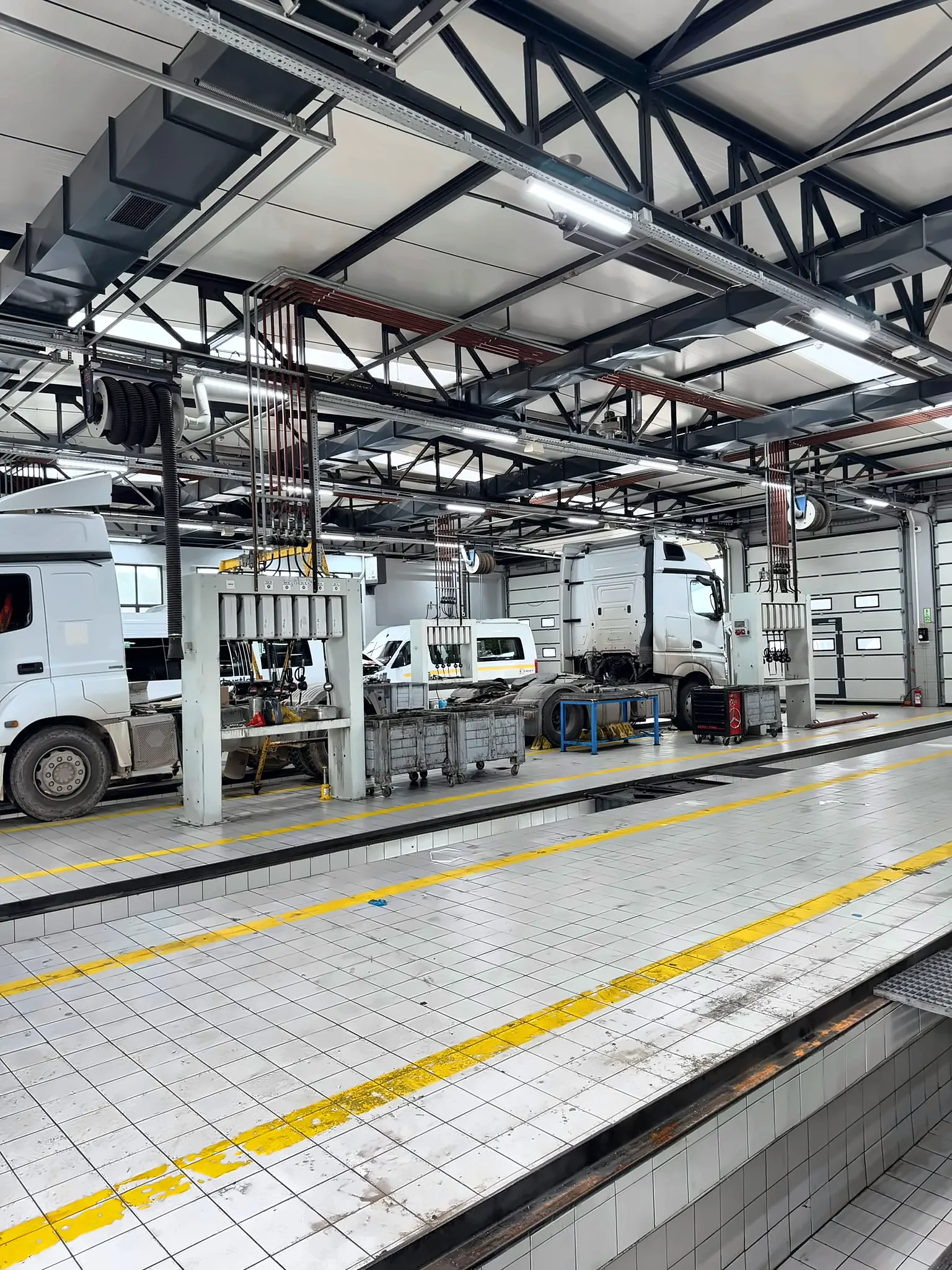
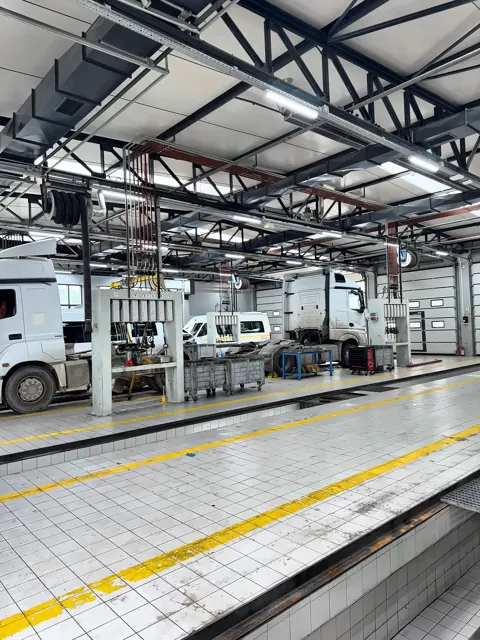
A vehicle exhaust extraction system is required in any enclosed space where work is carried out on vehicles with the engine running: authorised dealer service centres, independent workshops, heavy commercial vehicle and bus workshops, municipal and fleet garages, vehicle inspection and emissions testing stations, and fire and ambulance garages. The need becomes even more pronounced in workshops where the doors are kept closed during the winter months.
The Advantage of In-House Manufacturing
Because we manufacture exhaust extraction hose reels and system components ourselves under the İnter brand, we can produce made-to-measure solutions and supply spare parts quickly from stock. Hose length, hose reel position, duct diameter and connection details are determined according to the actual dimensions of the workshop; we do not try to fit the workshop to a standard catalogue.
After Installation
At handover we check the extraction performance of each station and give technicians a short briefing on fitting the nozzle and using the hose. Maintenance and replacement of wear parts such as the hose reel spring, locking mechanism, hose and nozzle are provided as part of our after-sales service.
Frequently Asked Questions
Does a vehicle exhaust extraction system replace general ventilation?
No, the two complement each other. General ventilation refreshes the workshop air; a vehicle exhaust extraction system captures the gas at source before it mixes with the air. With a vehicle exhaust extraction system in place, general ventilation can operate at a lower capacity.
Should I choose a fixed hose reel or a rail-mounted system?
If vehicles stand still on specific lifts, a fixed hose reel system is the most practical solution. If extraction is needed while the vehicle is moving (test lane, service lane, heavy commercial vehicles driving in and out), or if there are many workstations along a long line, a rail-mounted system is more suitable. In some projects we use both in the same workshop.
How many points can one fan serve?
Fan capacity is calculated from the number of vehicles running at the same time, the hose diameter and the duct length. For this reason we do not give a fixed number; we determine it during the site survey based on how your workshop is used.
Can it be retrofitted in an operating workshop?
Yes. We plan the duct routing around the existing structure and schedule the installation section by section to minimise disruption to the workshop’s operations.
Is it suitable for heavy commercial vehicle and bus workshops?
Yes. For large-diameter tailpipes and vehicles with vertical exhaust stacks, we select a suitable hose diameter and nozzle and, where necessary, a rail-mounted system.
How much heat can the exhaust hose withstand?
The hose is selected from a material suitable for the exhaust outlet temperature. Standard hoses are sufficient for petrol and diesel passenger cars; for heavy commercial vehicles and test lines running at idle for long periods, we recommend hoses with higher temperature resistance.
Is the system noisy?
The extraction fan is usually installed outside the building or at ceiling level, away from the working area. With a correctly selected fan and duct design, no disturbing noise is generated inside the workshop.