
Published: 21 October 2026 · İnter Servis Ekipmanları
What Does Exhaust Gas Contain?
The exhaust of petrol and diesel engines contains carbon monoxide, nitrogen oxides, hydrocarbons and, particularly in diesel engines, fine particulates. Carbon monoxide is colourless and odourless; its build-up can cause headaches, fatigue and loss of concentration without being noticed. The International Agency for Research on Cancer (IARC), part of the World Health Organization, classified diesel engine exhaust as carcinogenic to humans (Group 1) in 2012.
Why Is General Ventilation Not Enough?
General ventilation tries to dilute pollution by replacing the air in the workshop as a whole. The gas first spreads into the working environment, passes through the technician’s breathing zone and only then is discharged outside. Moreover, continuously exhausting large volumes of air significantly increases heating costs, especially in the winter months.
Extraction at Source
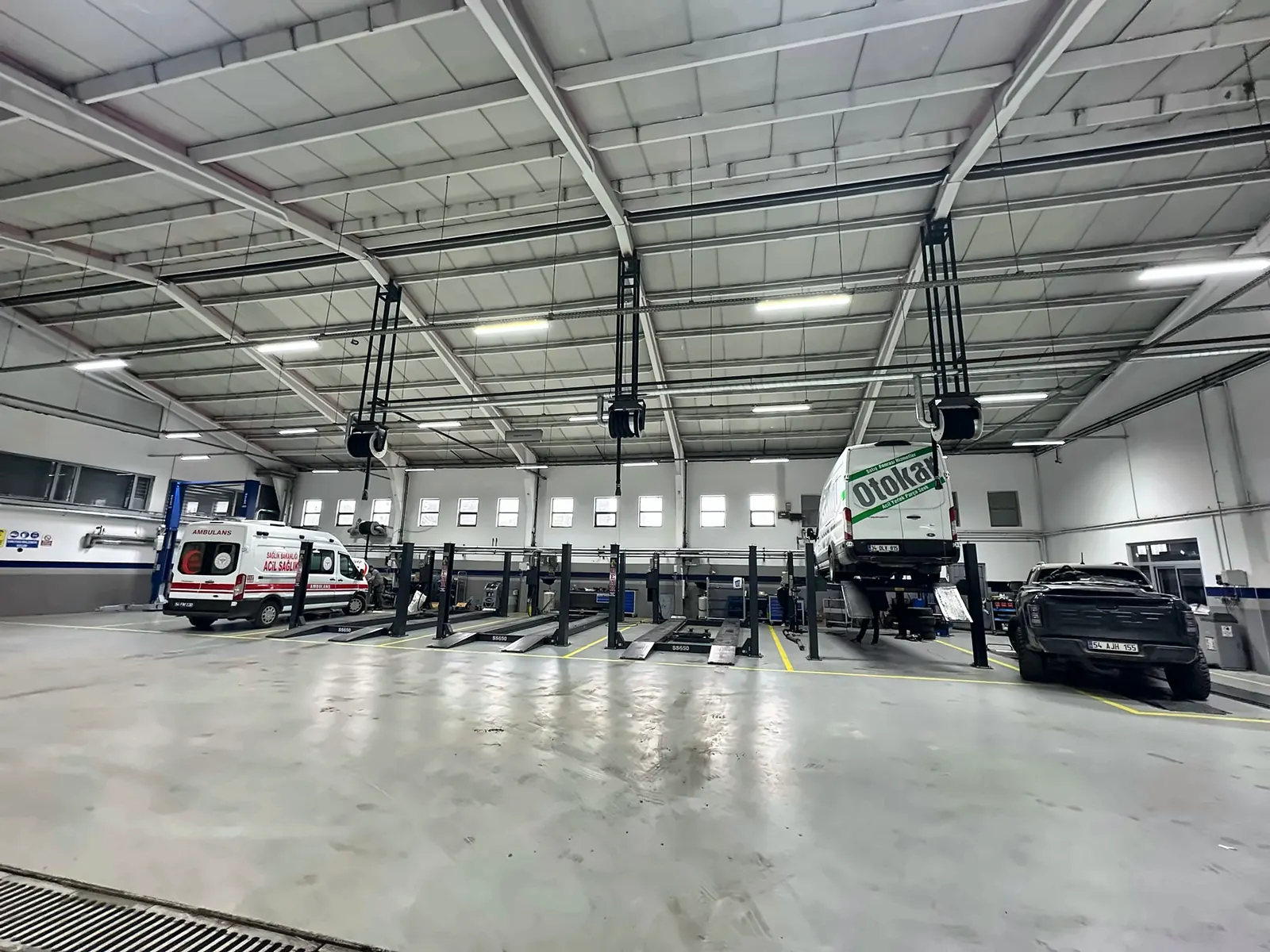
A vehicle exhaust extraction system takes the gas directly from the exhaust pipe before it spreads into the surroundings. The nozzle at the end of the hose is fitted to the exhaust; the extraction fan discharges the gas outside the building through the hose and duct. This approach both protects employee health and prevents heated or cooled workshop air from being wasted.
- The gas is captured before it reaches the employee’s breathing zone.
- As only as much air as the exhaust flow is discharged, energy loss is reduced.
- In hose reel systems the hose stays at the ceiling when not in use; the floor remains clear and safe.
Which System for Which Workshop?
In workshops where vehicles stay at specific vehicle lifts, a fixed hose reel exhaust extraction system is preferred; in inspection and test lines and heavy commercial vehicle workshops, where extraction must continue while the vehicle is moving, a rail-mounted exhaust extraction system is chosen. Hose diameter, fan capacity and duct route are determined during the site survey according to vehicle type and the number of engines running at the same time.
From a regulatory perspective too, employers are expected to control harmful agents to which employees are exposed primarily at source. A vehicle exhaust extraction system is the most direct way of meeting this obligation.