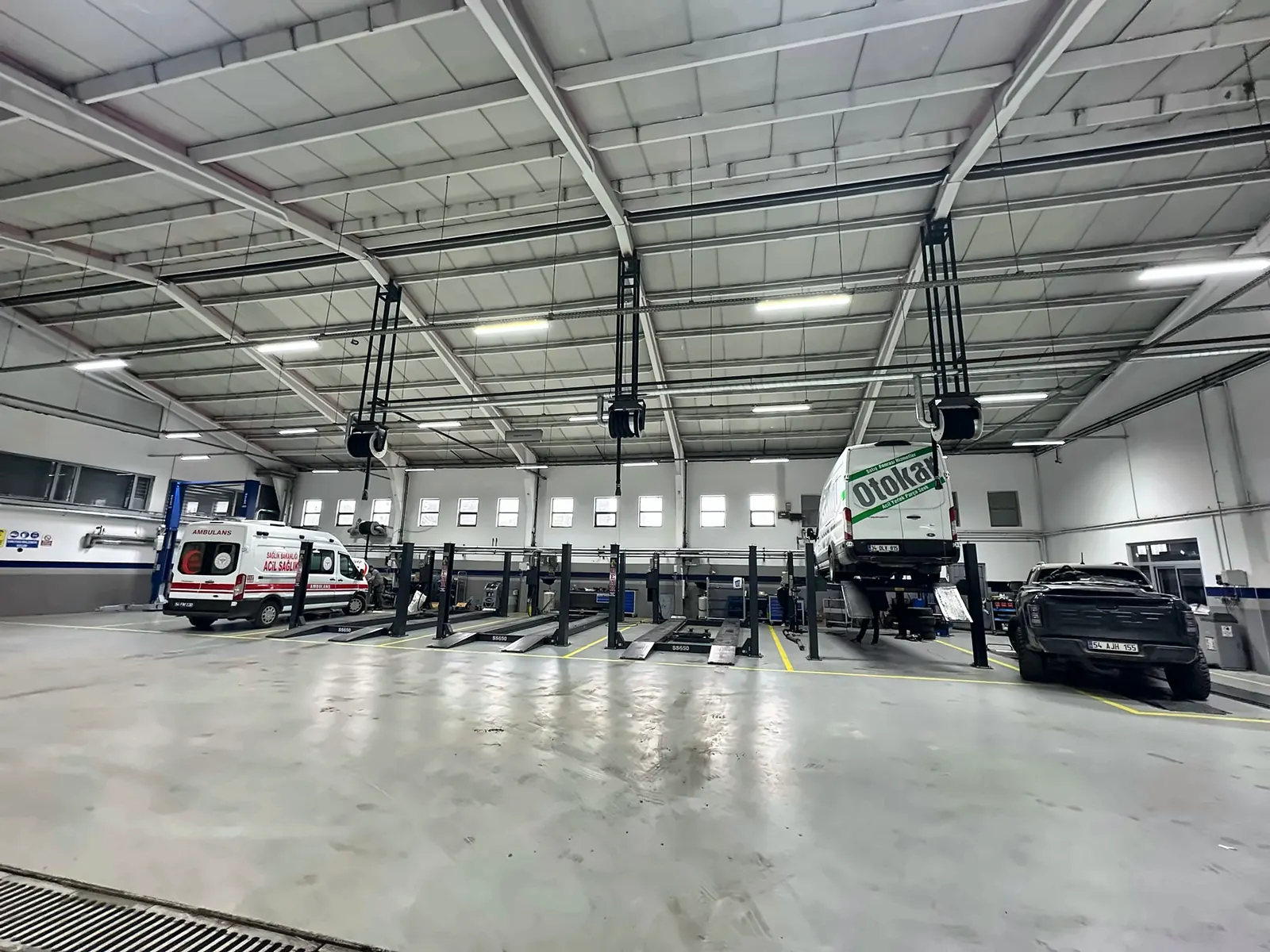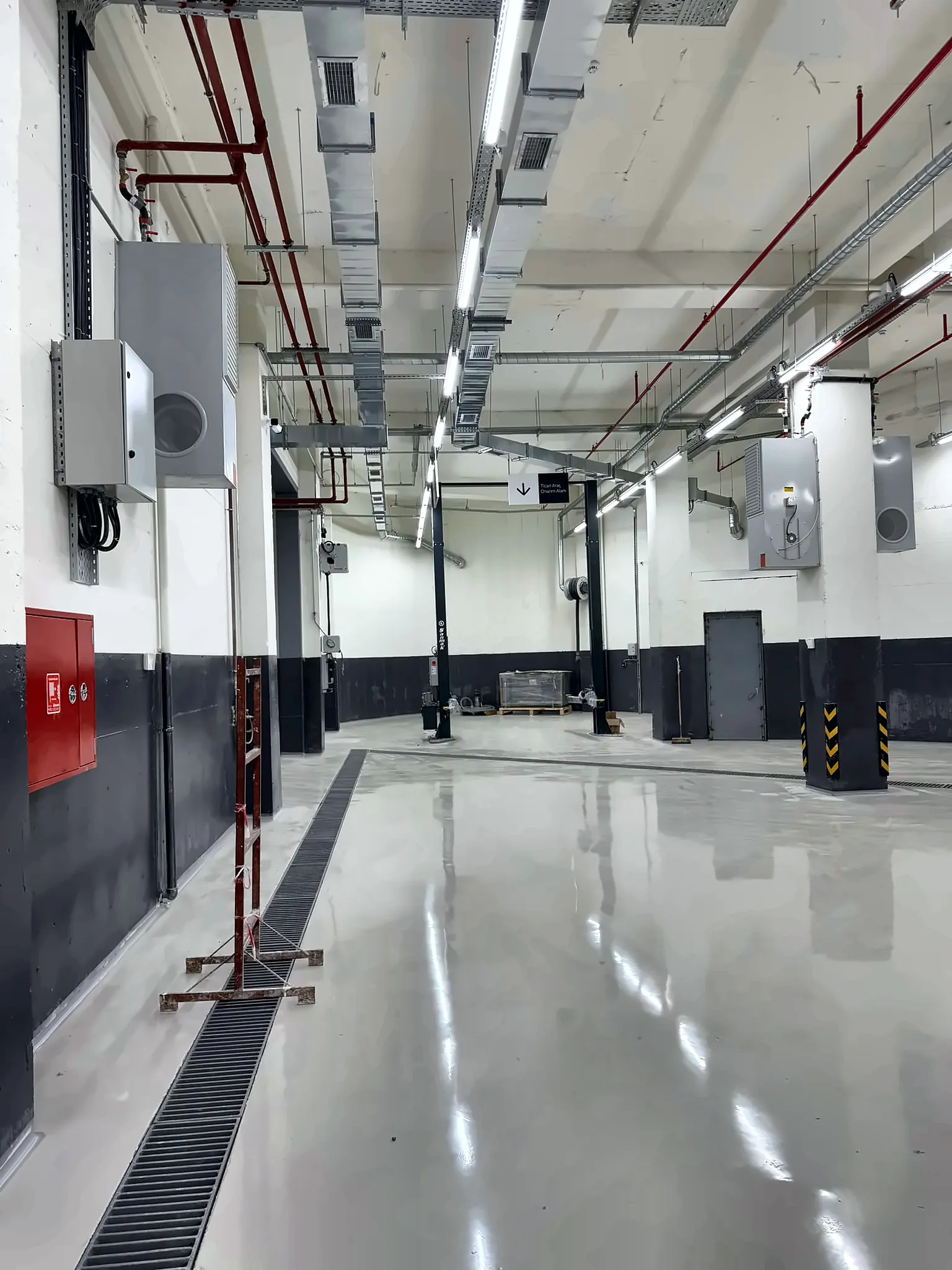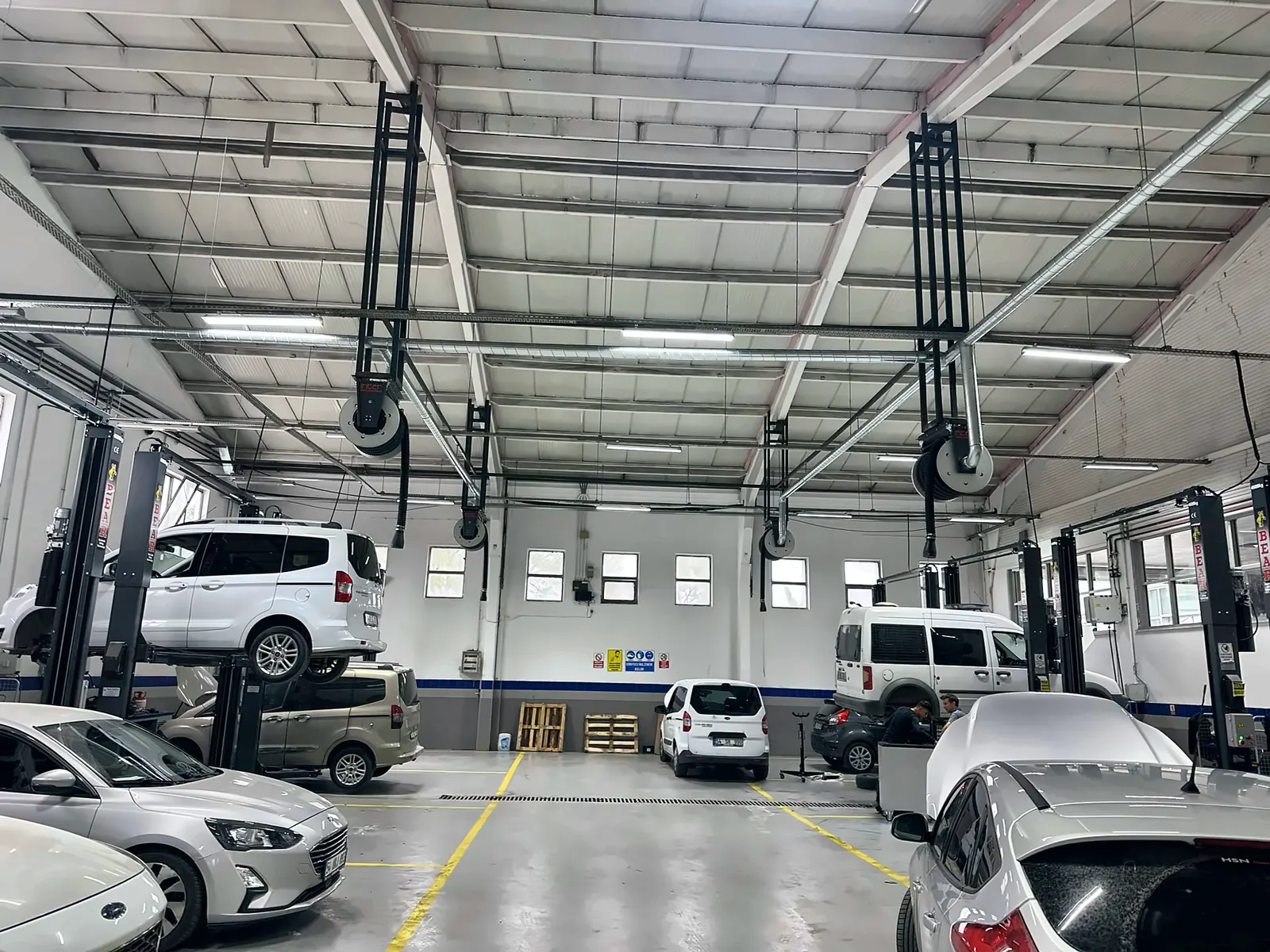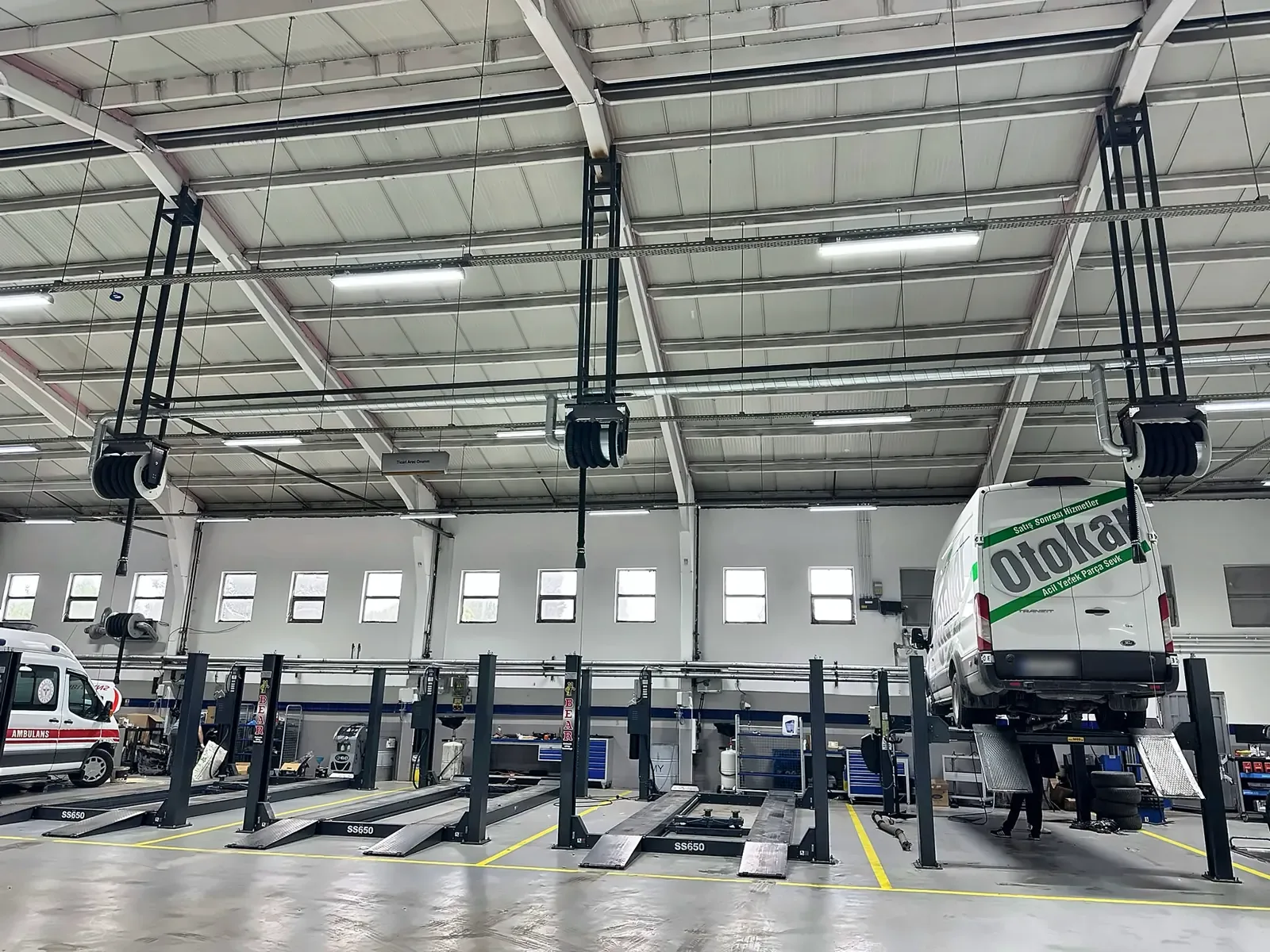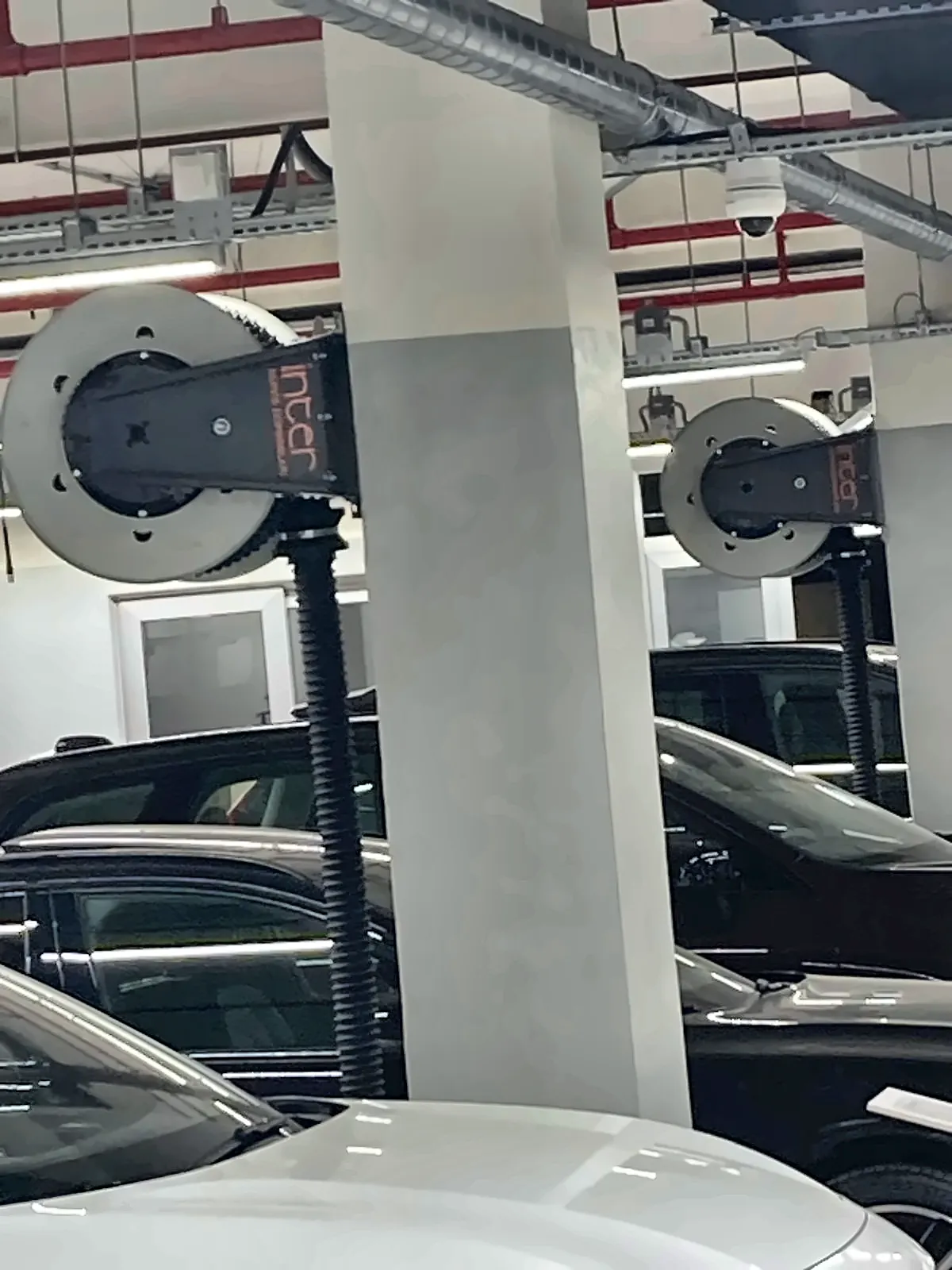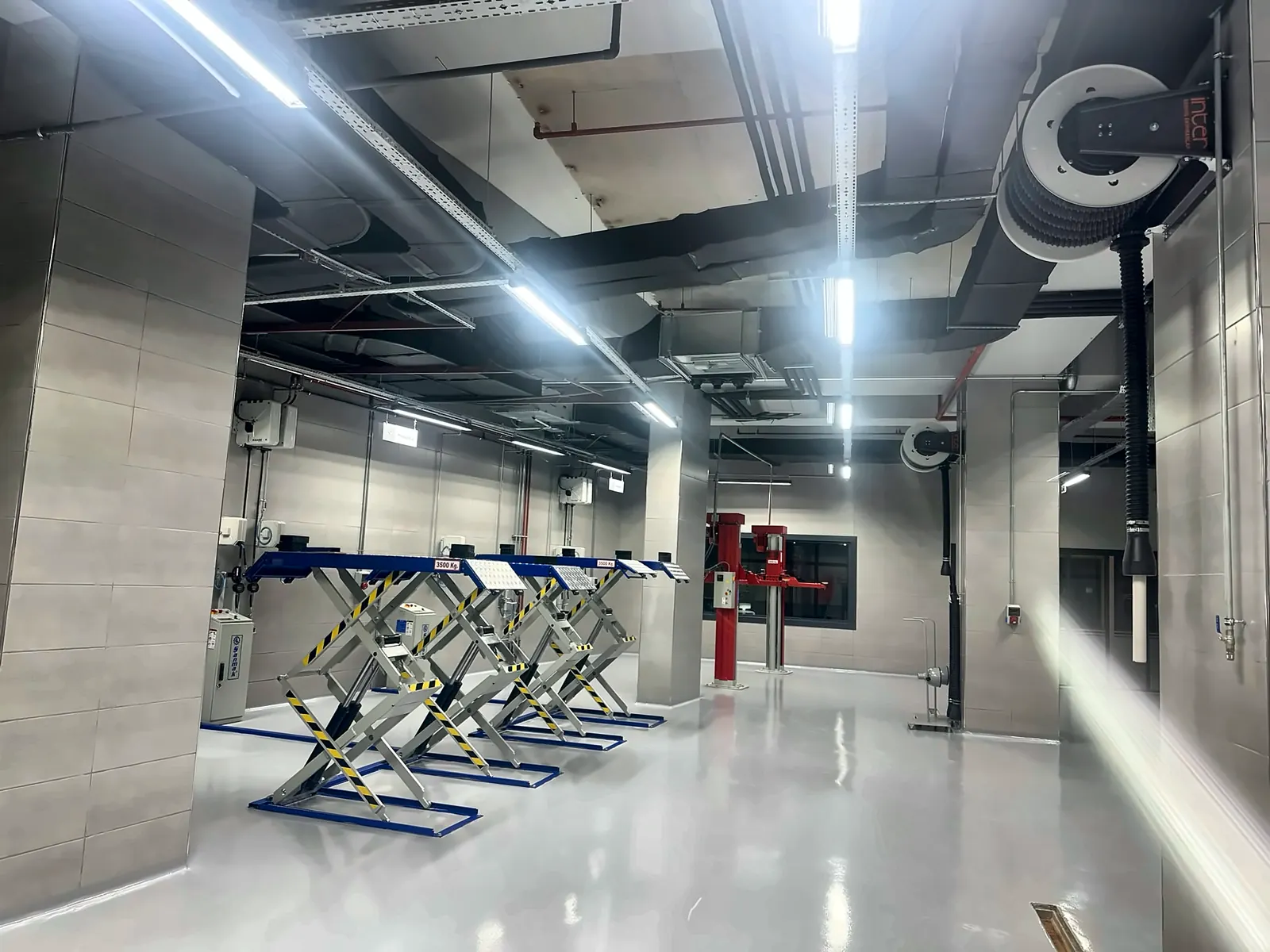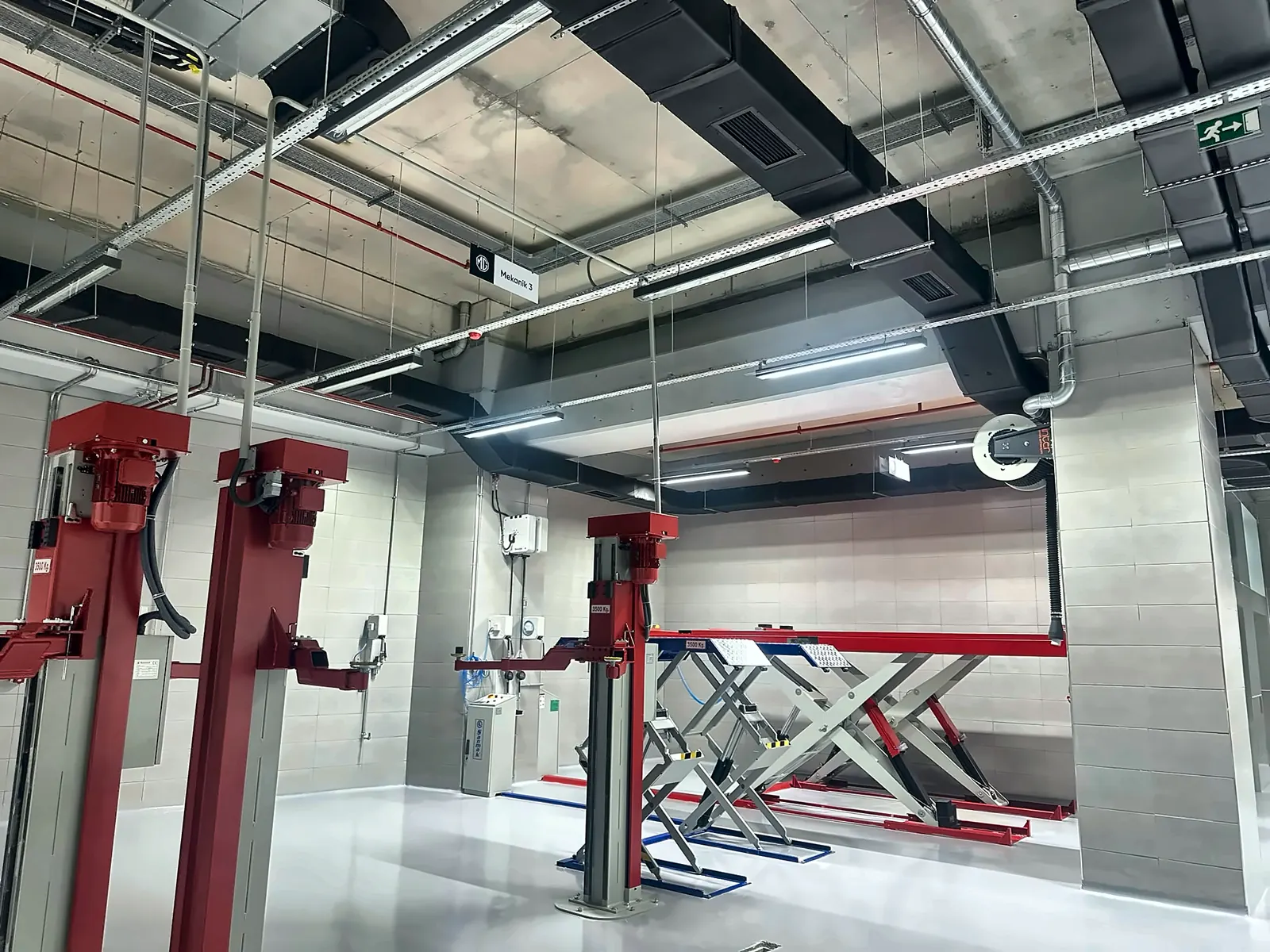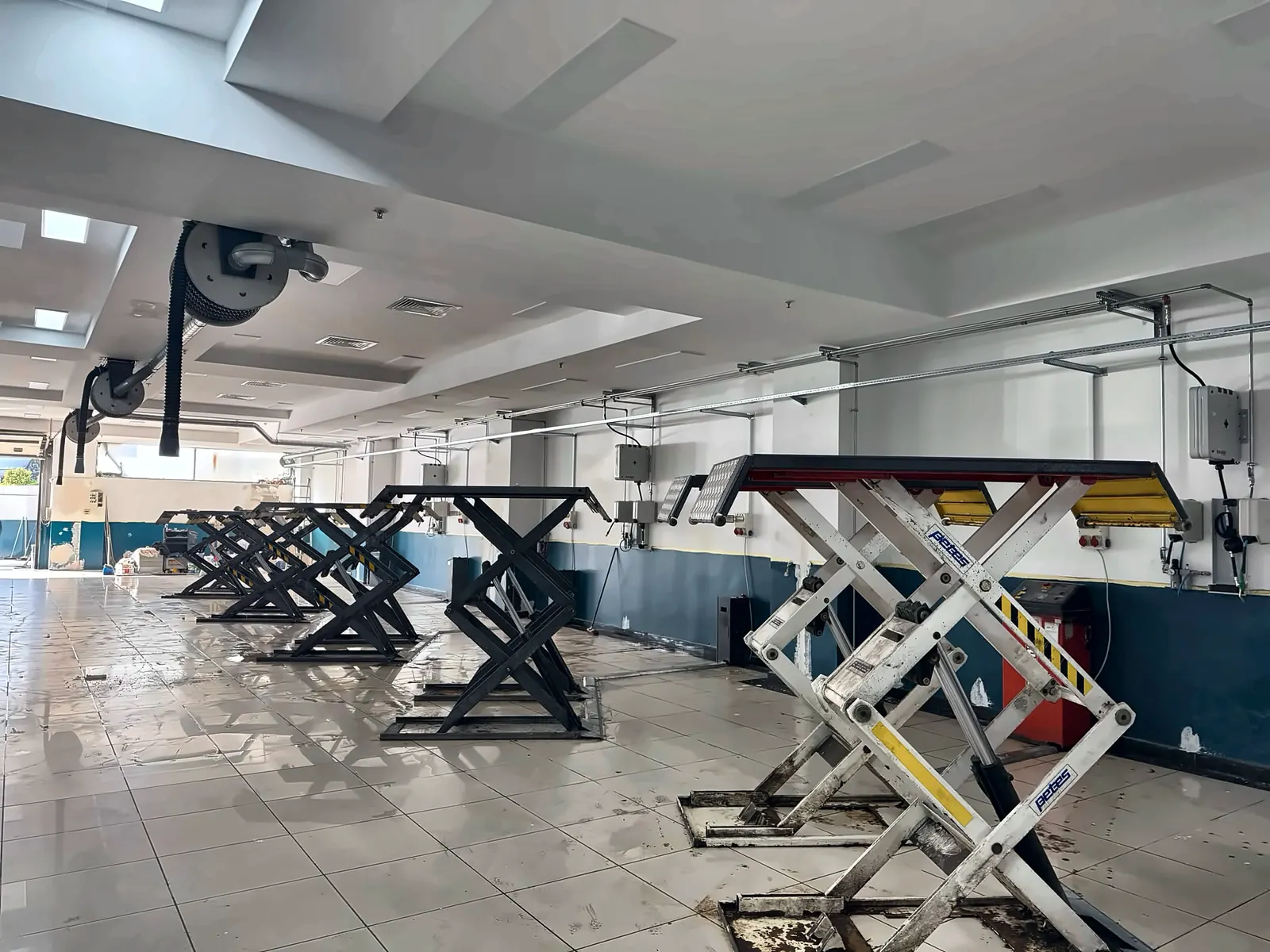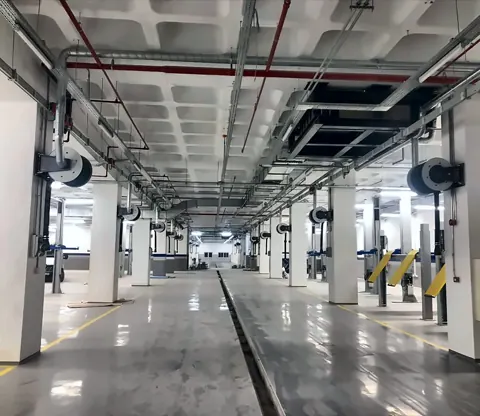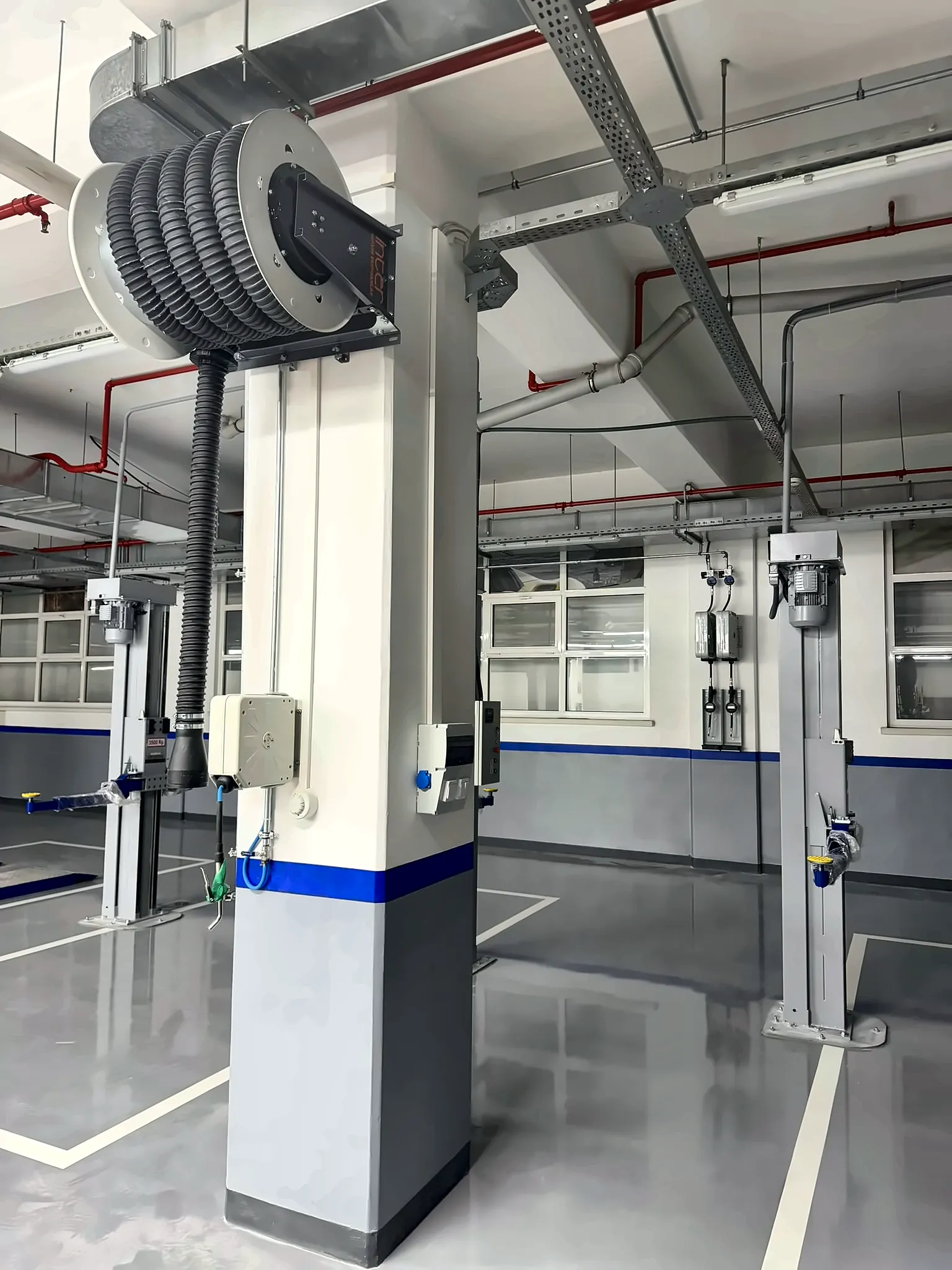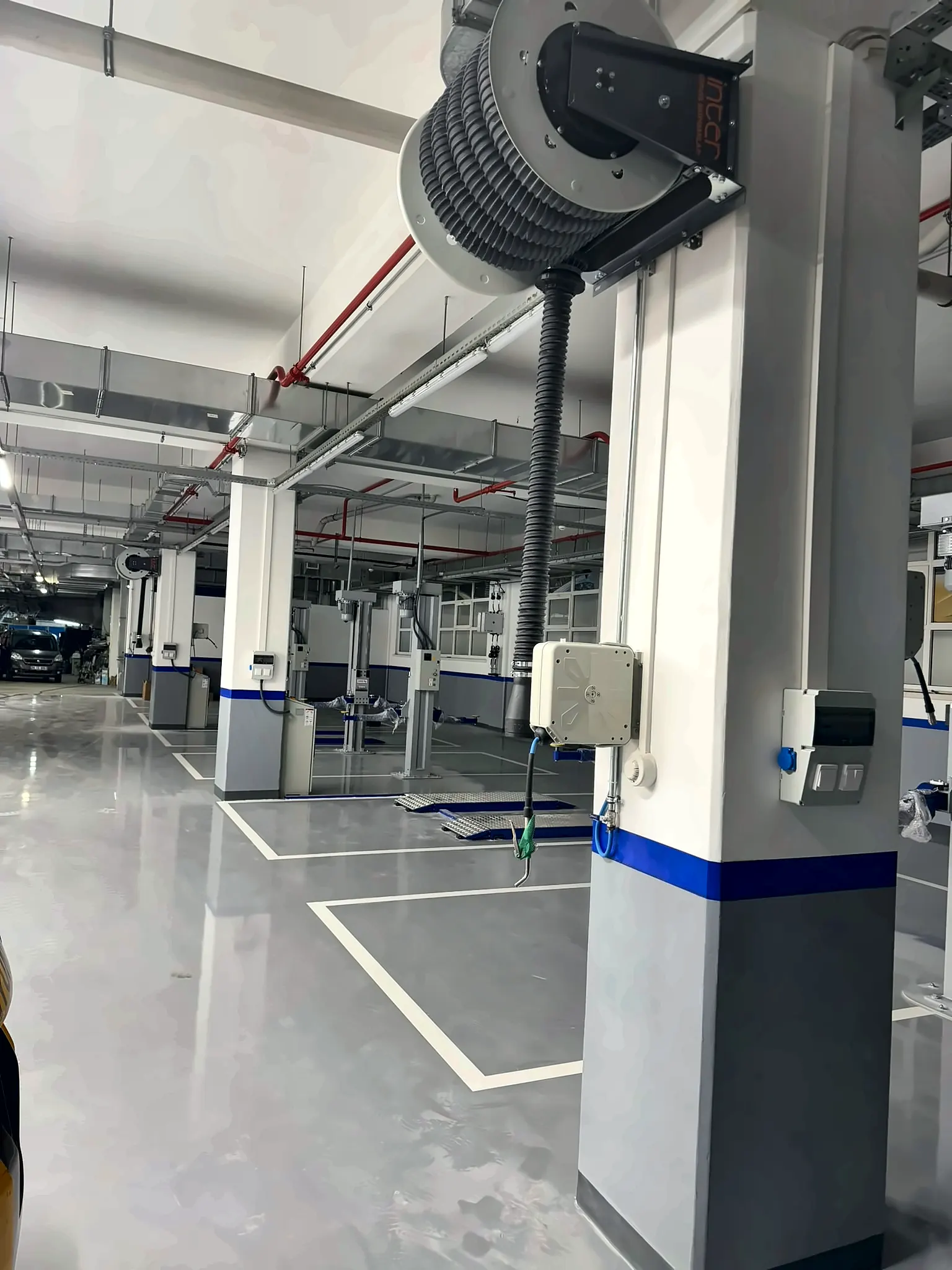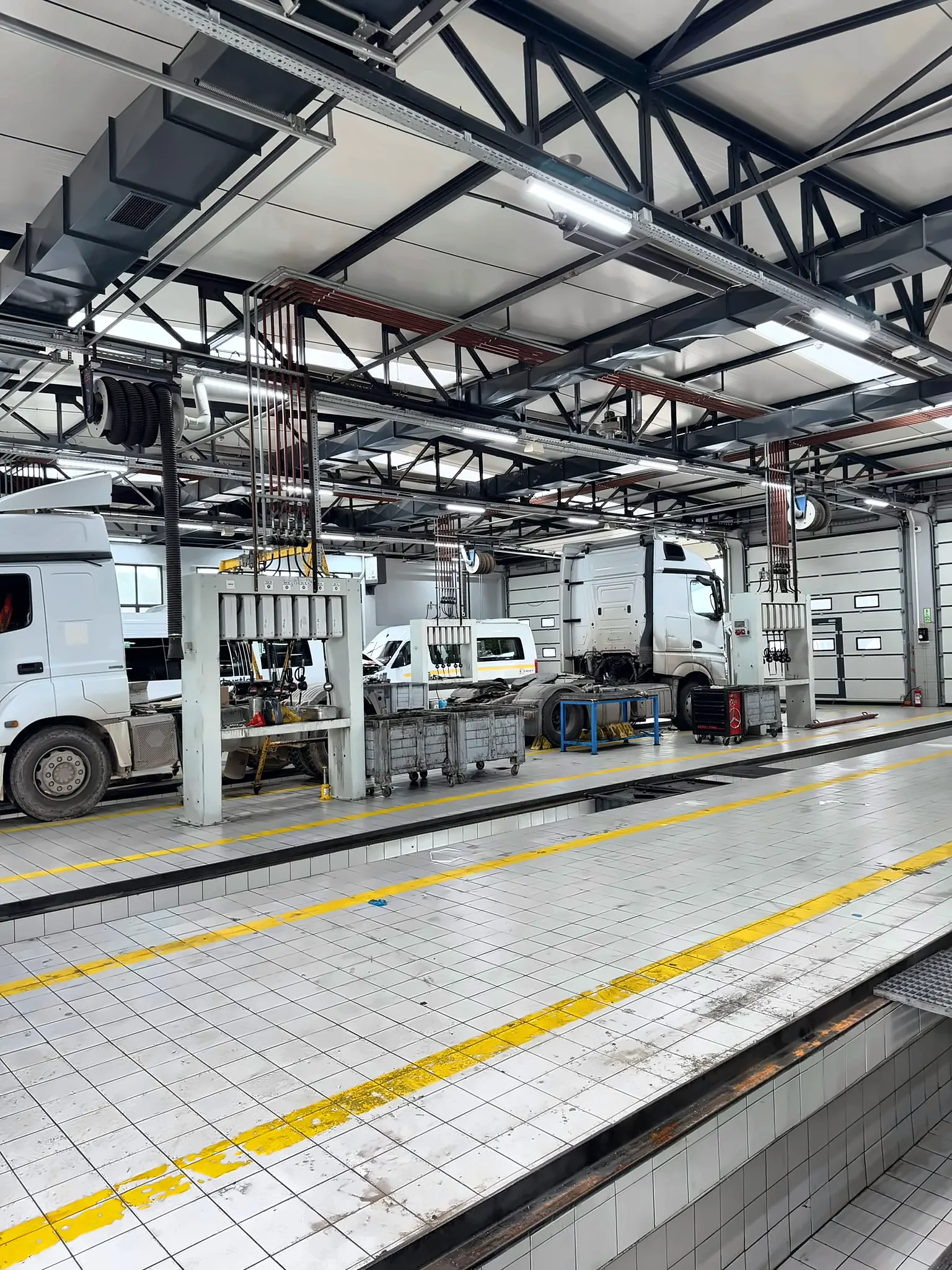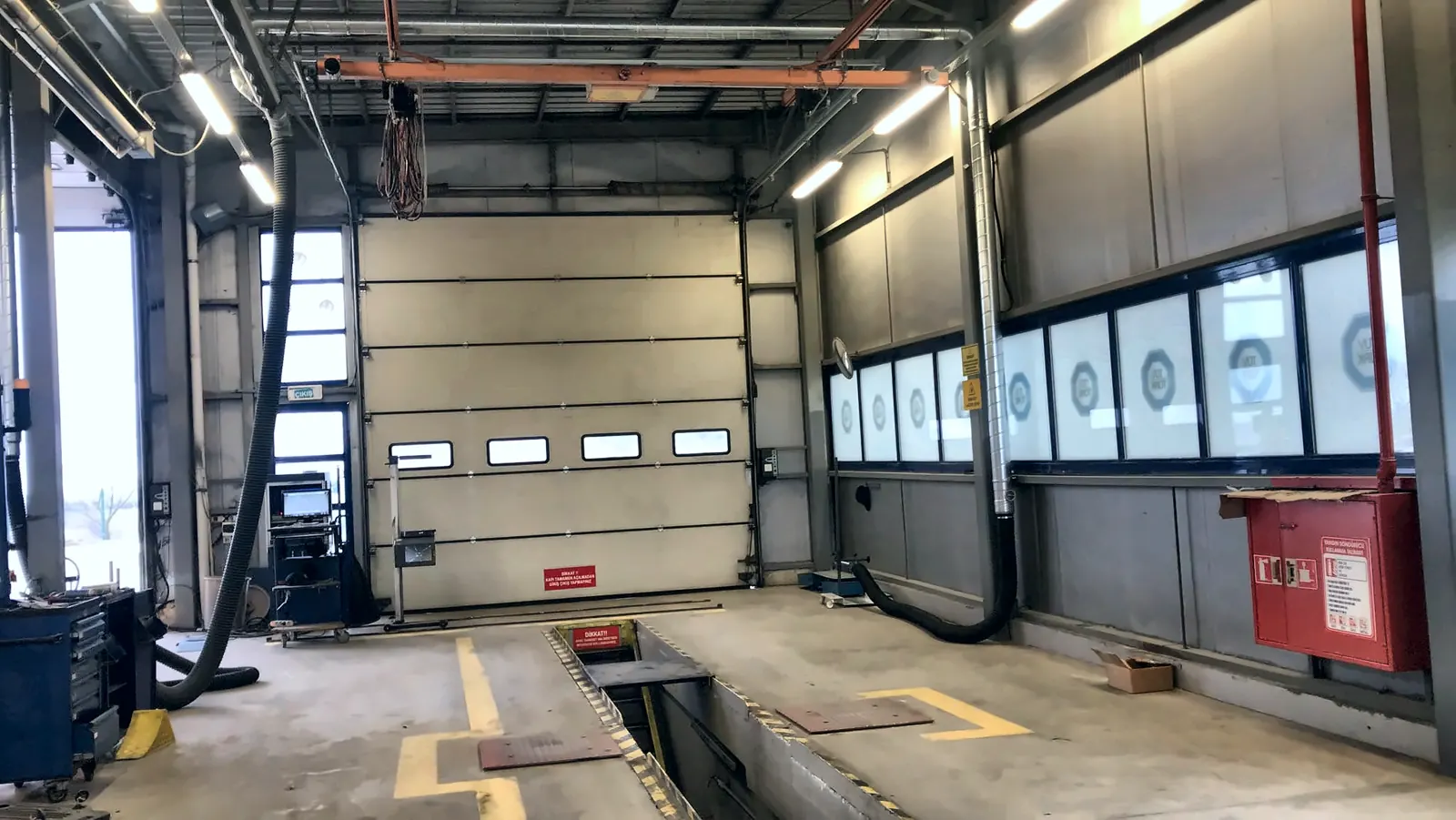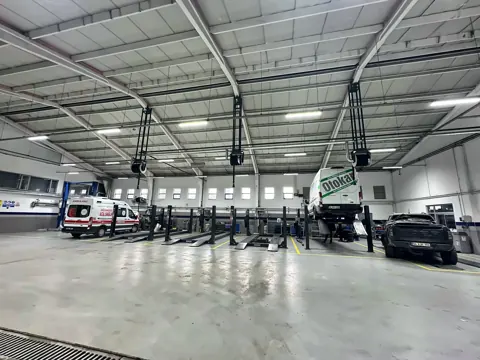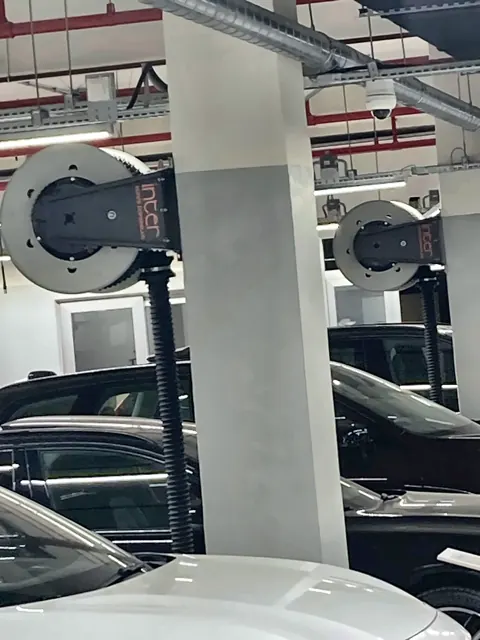
Which Workshops Is It For?
- Truck, tractor unit and bus service centres
- Service lanes where vehicles are driven from one workstation to the next
- Brake, idle and emissions test lanes
- Areas with frequent vehicle traffic in and out, where vehicles are brought in with the engine running
How Does It Work?
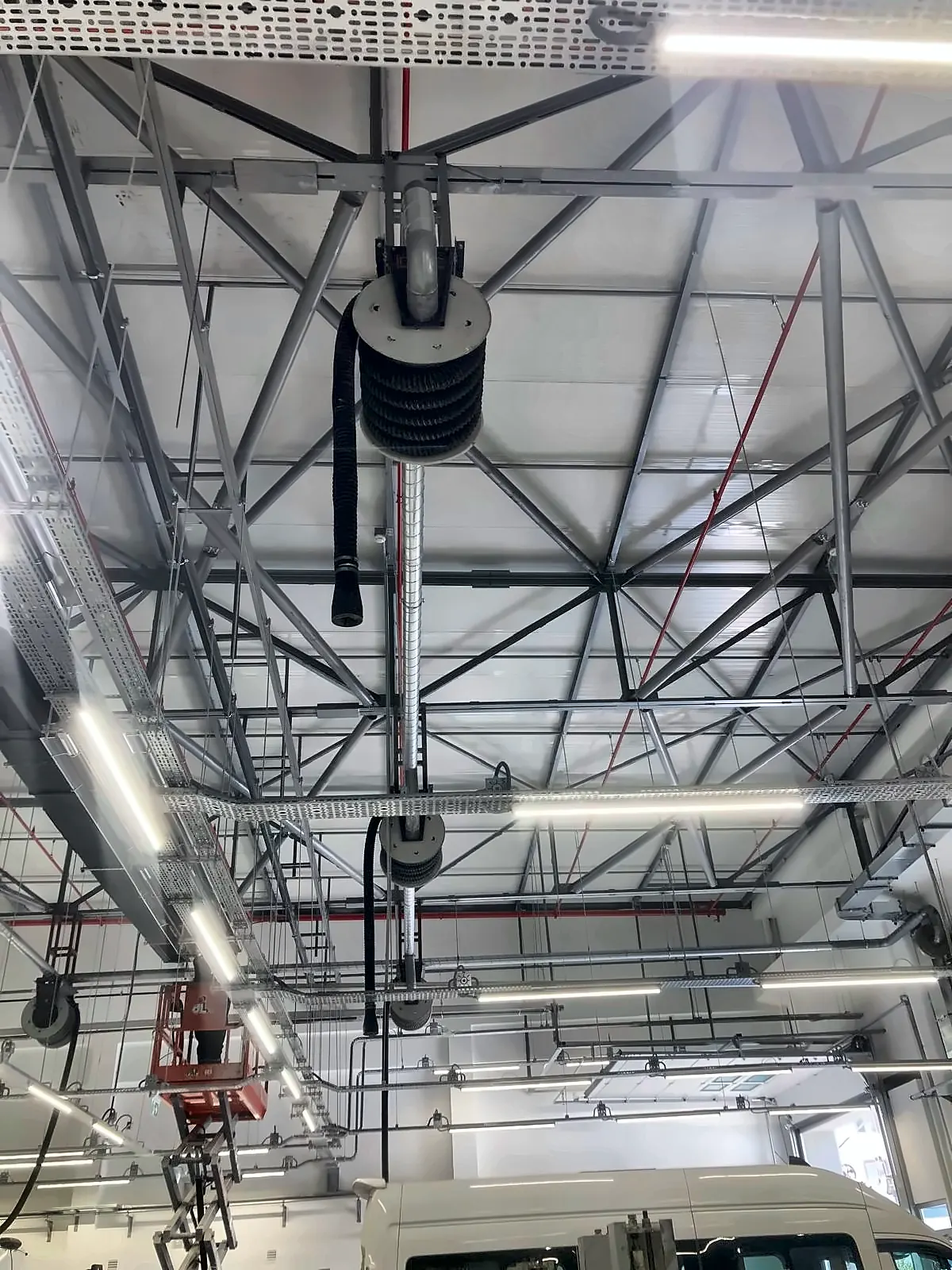
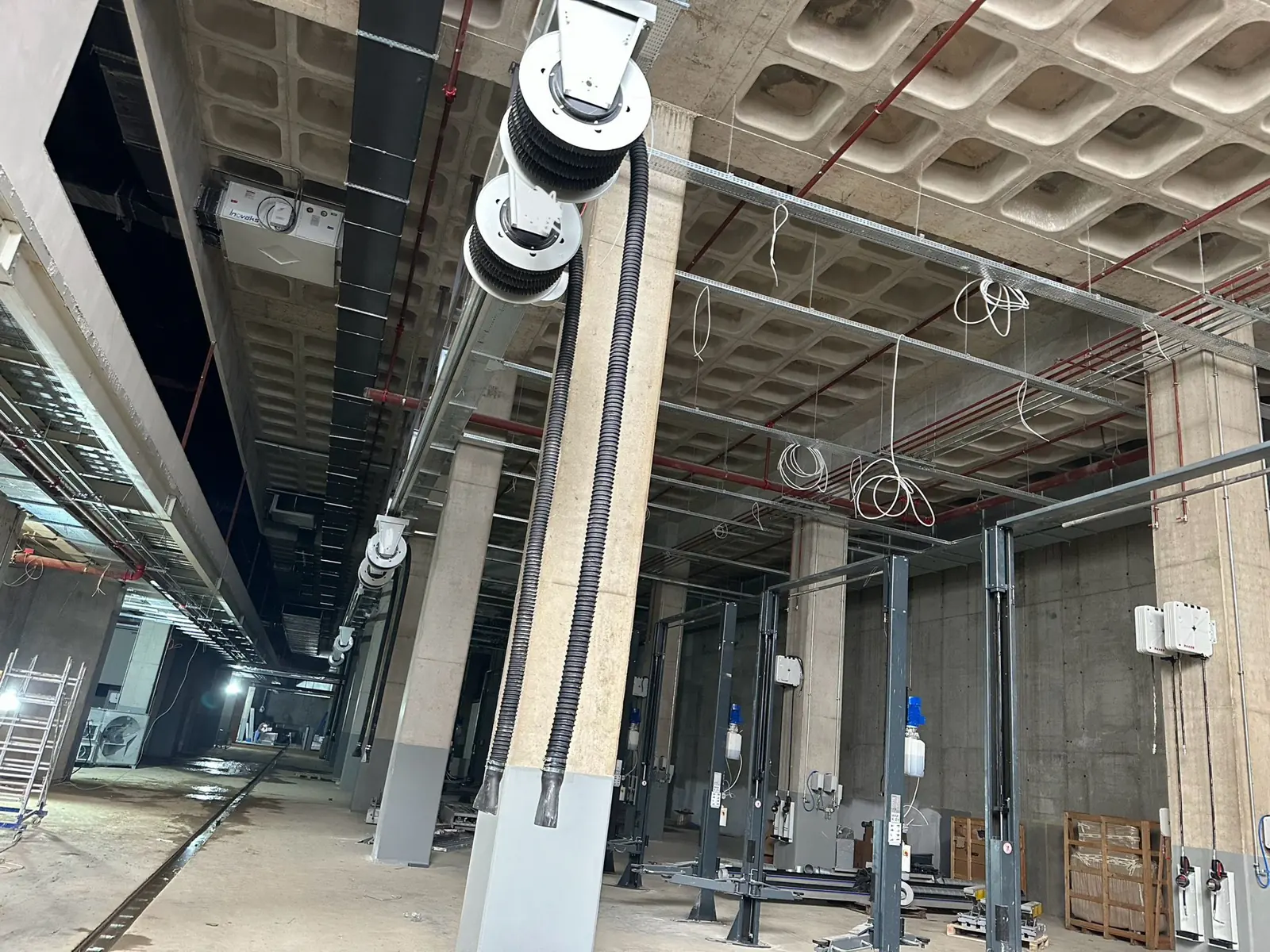
The rail profile also serves as the extraction duct or runs directly beneath it. Trolleys on the rail carry the hose; once the technician fits the nozzle to the tailpipe, the trolley slides along the rail as the vehicle moves forward. If required, a safety part at the end of the line releases the nozzle from the tailpipe in a controlled manner, so the hose is not strained as the vehicle leaves the line.
Advantages
- Continuous extraction while the vehicle is moving
- Several workstations served by one fan
- Floor, duct and lift area kept completely clear
- Easy handling of long, large-diameter hoses
Design
Rail length, number of trolleys, hose diameter and fan capacity are determined by the number of workstations on the line, the movement of vehicles along the line and the number of engines running at the same time. The rail is supported by suspension elements suited to the building structure; we identify the suspension points during the site survey.
Safety of the Rail System
When the vehicle reaches the end of the line, the nozzle must detach from the exhaust in a controlled manner. The safety release fitting does this: it releases the nozzle at a defined pulling force and prevents damage to the hose, the vehicle or the rail. As the trolleys moving along the rail carry the hose well above the floor, the risk of hoses getting tangled around technicians’ feet is also eliminated.
Efficiency on Long Lines
In a rail system, the number of vehicles running their engines at the same time determines the fan capacity. Even if there are many stations on the line, the number of vehicles running simultaneously is usually smaller; a correct calculation avoids selecting an oversized and expensive fan.
Frequently Asked Questions
How long can a rail-mounted system be?
The rail length is planned according to the length of the workshop line. On long lines, fan capacity and duct connection points are selected accordingly.
Can rail-mounted and hose reel systems be used in the same workshop?
Yes. In some projects we use hose reels at fixed workstations and rail-mounted systems in sections where vehicles move; both can be connected to the same fan and duct infrastructure.
Is the rail profile mounted to the ceiling or to the wall?
Both are possible, depending on the building structure. In steel-frame workshops it is usually suspended from the roof trusses; in reinforced concrete buildings, from column or wall brackets.