
Published: 21 October 2026 · İnter Servis Ekipmanları
1. Finalise the Vehicle Lift Layout and Workflow
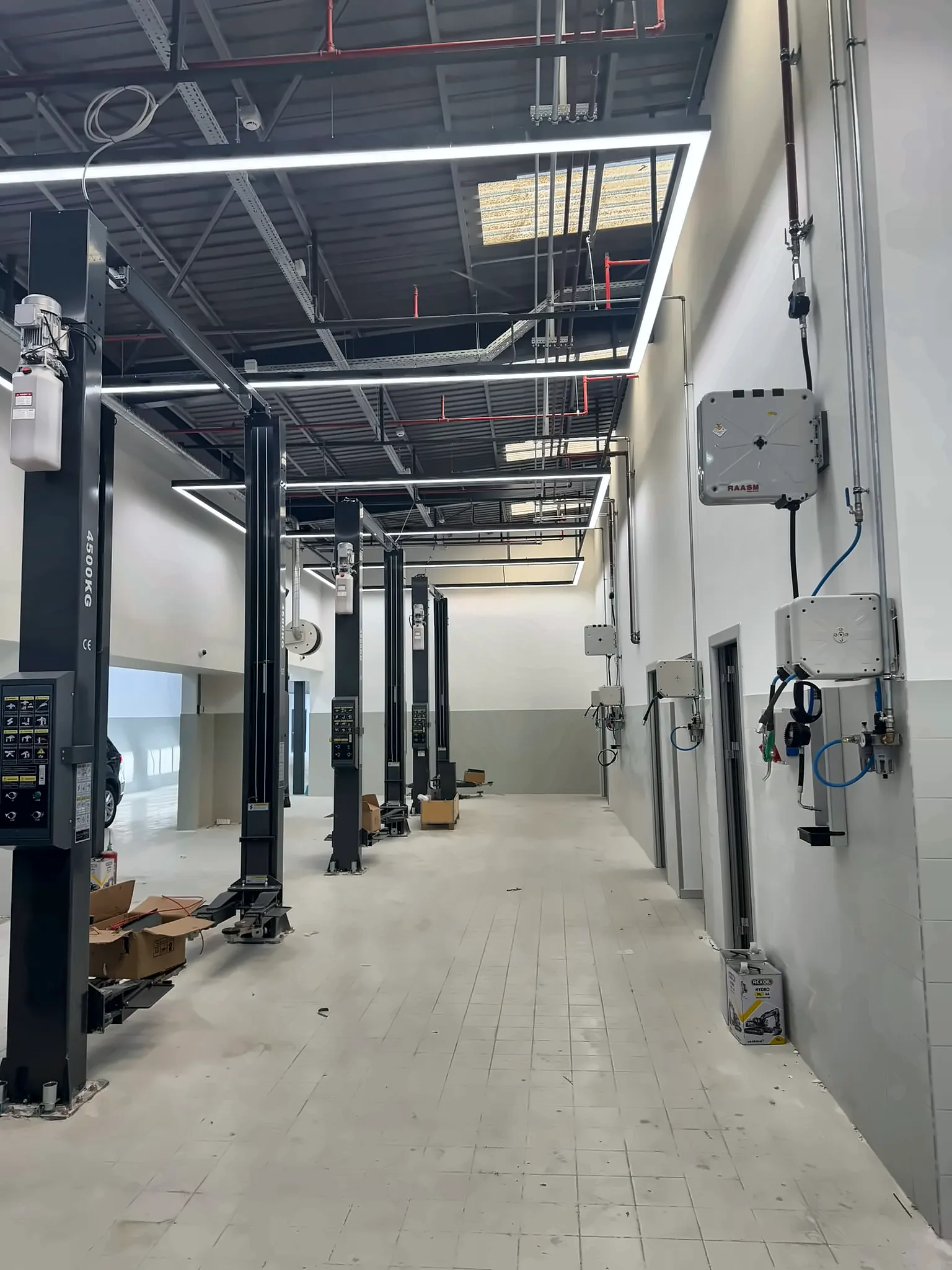
Every line of the installation serves the workstations. The positions of the vehicle lifts, quick service points, tyre and heavy repair areas must therefore be fixed first. The direction of vehicle entry and exit, door positions and technicians’ movement areas determine where hose reels and drops will be placed.
2. Measure the Ceiling Structure and Height
Exhaust ducts, compressed air and oil lines are usually routed at ceiling level. A steel frame, reinforced concrete beams or a suspended ceiling directly affect suspension details and line routes. Clashes with overhead cranes, lighting, ventilation ducts and fire protection systems should be identified at this stage.
3. Choose the Type of Exhaust Extraction
If vehicles are worked on at fixed vehicle lifts, a fixed hose reel exhaust extraction system is preferred; if extraction is needed while the vehicle is moving, a rail-mounted system is chosen. The maximum number of vehicles with engines running at the same time is the basis for determining fan capacity. The point where the duct exits the building should also be reserved in the architectural design.
4. Reserve Space for the Oil Room
The oil room is the heart of the central oil distribution system. A room should be planned that a tanker or large containers can easily access, where fresh and waste oil areas can be separated, and where spill prevention measures can be taken. The distance between the oil room and the furthest workstation affects pump and pipe selection.
5. Determine the Oil Types to Be Used
Each oil type requires its own tank, pump and line. While the most frequently used engine oils are put on the central line, less frequently used special oils can be handled with mobile units. This decision determines the number of tanks and the size of the oil room.
6. Calculate Compressed Air Demand
Pneumatic hand tools, tyre inflation, cleaning and pneumatic pumps are fed from the same line. Total air consumption determines the compressor and main line diameter. A ring main, air service units and drain points should be planned from the outset.
7. Don’t Forget Waste Oil Collection
It should be planned how waste oil will be transferred from the collection units to the tank and where it will be handed over to the licensed waste oil collector. A closed discharge line eliminates the need to carry waste oil through the workshop.
8. Identify Water Points
Points requiring water for washing, parts cleaning and floor cleaning should be identified; where possible, water hose reels should be grouped at the same station as the air and oil hose reels.
9. Combine Everything in a Single Project
When lines are installed separately and at different times, routes clash, the workshop looks untidy and maintenance becomes more difficult. Handling all lines in a single project reduces both installation time and total cost.
10. Discuss After-Sales Service from the Start
Hose reels, pumps, meters and vehicle lifts require regular maintenance. The installer’s ability to provide spare parts and service support is important for the system to run trouble-free for many years.
If you would like to address these steps together when planning your workshop, take a look at our turnkey workshop design process or fill in the quote form.